PM Modi’s address on the eve of Navratri served multiple strategic purposes, blending policy announcement with emotional and cultural resonance; By linking tax reform with tradition, culture, and citizen empowerment, The GST 2.0 address positioned economic policy as a movement of national renewal—just in time for the festive season and the upcoming elections.
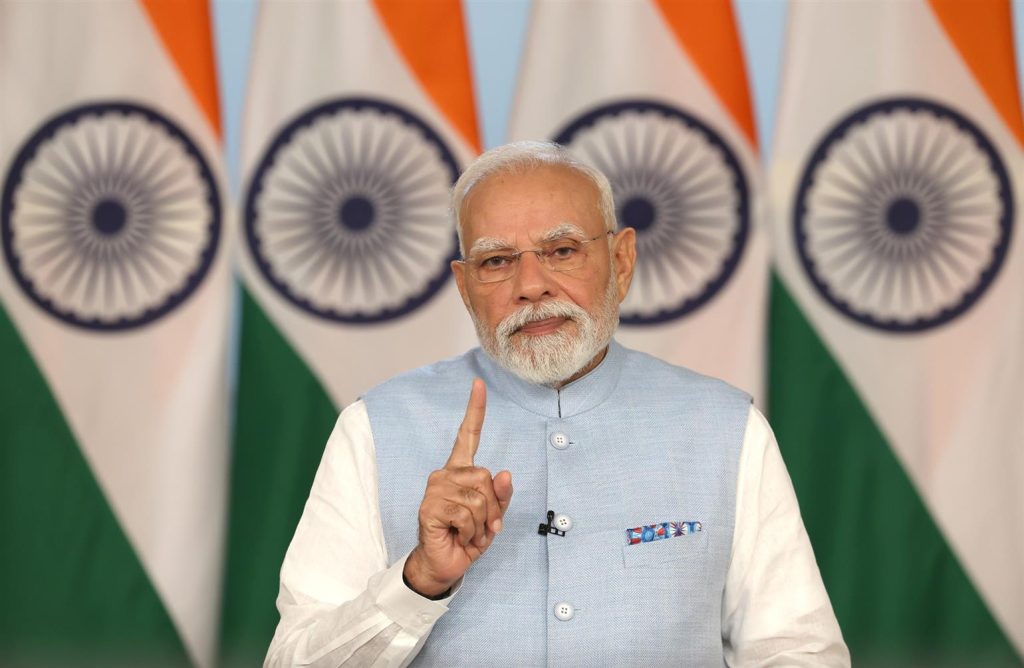
In a strategically timed address on the eve of Navratri and ahead of the launch of next phase of tax reform—GST 2.0—Prime Minister Narendra Modi on Sunday announced that the “Next Gen GST reforms” will mark India’s “GST Bachat Utsav”, helping Indians save more, making it easier for them to buy their favourite things. PM Modi said the GST changes will bring happiness to families and boost India’s growth story, topped with new slogans like “I buy Swadeshi, I sell Swadeshi” and “Nagarik Devobhava” (citizens are divine).
Talking of economic patriotism, the PM blended policy with emotional and cultural resonance with a renewed call for Aatmanirbhar Bharat. Opening with wishes for Navratri—the festival celebrating feminine power and renewal—PM Modi declared that from its very first day, India was embarking on a significant step in its journey of self-reliance.
Echoing the spirit of the Swadeshi movement that powered India’s freedom struggle, he urged citizens to adopt ethical consumerism as a civic duty and urged every household and shop to become a “beacon of Swadeshi” by choosing ‘Made in India’ products. His message was clear—economic reforms must be rooted not only in policy but also in people’s participation and national pride. “Just as Swadeshi strengthened our independence movement, it will now fuel our economic freedom,” PM Modi said. “Let every Indian proudly say: I buy Swadeshi, I sell Swadeshi.”
Coining a new mantra “Nagarik Devobhava”, which he said must guide governance going forward, he placed citizens at the heart of national progress. Encouraging state governments to play an active role, PM Modi called for a nationwide push to create investment-friendly environments and boost regional manufacturing.
The GST Bachat Utsav, announced alongside GST 2.0, aims to deliver tangible economic benefits to the common citizen. The revamped tax structure simplifies slabs—primarily into 5% and 18%—and slashes rates on essential items like food, medicines, soap, and insurance. According to the PM, 99% of goods previously taxed at 12% are now in the 5% bracket.
These reforms, he said, directly benefit the poor, the middle class, farmers, youth, and small businesses. The measures are expected to generate Rs 2.5 lakh crore in citizen savings, amplified by recent income tax relief for those earning up to Rs 12 lakh. The Prime Minister referred to it as a “double bonanza” for India’s rising neo middle class, which he said now includes 25 crore people lifted out of poverty. Revisiting the complex tax regime that existed before the introduction of GST in 2017, the PM highlighted how GST 2.0 further simplifies business operations and boosts investor confidence.