From early caution under first Prime Minister Nehru, confrontation under Indira Gandhi, to incumbent PM Modi’s personalised diplomacy, India-US relations have come a long way since India’s Independence balancing optics, strategy and pragmatism. A report by Vibha Sharma
From a relationship that began to evolve during Jawaharlal Nehru’s tenure, to confrontation under Indira Gandhi, to a nuanced shift under P. V. Narasimha Rao, to a perceptibly favourable one under Atal Bihari Vajpayee, to a strategic partnership under Manmohan Singh, and to a personalised one-on-one under Narendra Modi, the India–US relationship has come a long way, evolving in response to shifting geopolitical dynamics and India’s economic trajectory.
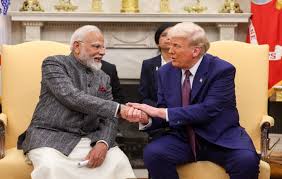
Recently, after a barrage of incendiary remarks against India by US President Donald Trump and his associates over trade tariffs, there was a sudden shift with an exchange of pleasantries between him and Prime Minister Narendra Modi, which can be interpreted in many ways—India’s pragmatic foreign policy approach; a reiteration of the strategic importance of the relationship; a genuine diplomatic effort to de-escalate tensions and open the way for reconciliation; or perhaps a recognition of India’s independent standing and growing economic and strategic importance, not just in the region but globally.
“Deeply appreciate and fully reciprocate President Trump’s sentiments and positive assessment of our ties. India and the US have a very positive and forward-looking comprehensive and global strategic partnership,” PM Modi said in response to Trump, who spoke of friendship and the special relationship between the two countries. Saying that he will “always be friends with Modi and that he is a great Prime Minister,” Trump also added that “There is nothing to worry about.”
How this turnaround transforms the situation on the ground in terms of economic and trade relations between the two nations remains to be seen, as just a day earlier than this friendly exchange, Trump had cynically posted: “Looks like we’ve lost India and Russia to deepest, darkest China. May they have a long and prosperous future together!”
A couple of days later, while indicating another step towards putting things back on track and “continuing negotiations to address the trade barriers” between the two countries and speaking with “very good friend, Prime Minister Modi, in the upcoming weeks,” he reportedly urged EU officials to hit China with tariffs of up to 100% as part of a strategy to pressure Russian President Vladimir Putin, and encouraged them to slap India with similarly expansive tariffs.
This came just hours after he wrote on Truth Social: “I feel certain that there will be no difficulty in coming to a successful conclusion for both of our Great Countries!” To which, PM Modi responded: “India and the US are close friends and natural partners. I am confident that our trade negotiations will pave the way for unlocking the limitless potential of the India-US partnership. Our teams are working to conclude these discussions at the earliest. I am also looking forward to speaking with President Trump. We will work together to secure a brighter, more prosperous future for both our people,” thus indicating that things were back on track.
Former Fellow with the US Congress and senior journalist K. V. Prasad explains: “To say that India-US relations are under stress is stating the obvious. For the past few months, New Delhi has been pounded with threats of tariffs, which eventually kicked in last month. The move injected a major disruption in the course of an over two-decade partnership characterised as strategic. It rekindled memories of the low point in bilateral relations when then President Richard Nixon sent the Seventh Fleet during the Bangladesh war.
“Otherwise, since PM Jawaharlal Nehru, New Delhi sought to build a strong relationship with Washington. Since the 1971 episode it took several years of hard work from both sides to plough it back and put it on track, growing across sectors from the depths of the ocean to the frontiers of space. In his second term, President Trump appears to move beyond being transactional. The latest move brings back a sense of uncertainty. It will require both patience and dexterity—political and diplomatic—to strike a new rhythm,” he adds.
Optics and geopolitics
Whether it is politics or geopolitics, optics play a major role, especially with Modi and Trump.
The recent positive exchange between the two leaders suggests an effort to open a window for recalibration of the relationship, signalling a concentrated effort to reset ties, soothe nerves, and pave the way to resume trade discussions, though officials in the know of developments maintain that backchannel talks never really stopped. Despite Trump’s erratic, emotional behaviour, India tried to portray a calm and collected self.
Analysts attribute Trump’s reactions to his extremely transactional nature, perhaps also to India’s stance after the ceasefire announcement in Kashmir. The lack of Indian endorsement to his repeated claims of credit for the ceasefire may have added to his sharp reactions, but the end of the tirade underscores India’s strength and importance—both in the region and the world.
PM Modi’s positive responses to Trump’s recent overtures are in alignment with India’s diplomatic strategy of keeping communication channels open regardless of disagreements. “PM Modi’s foreign policy is known for being pragmatic and prioritising India’s national interests over rigid ideological stances. Despite US concerns, India continued its engagement with Russia and recently also displayed warmer interactions with China. PM Modi’s response to Trump, along with participation in events like the Shanghai Cooperation Organisation (SCO) summit, highlights India’s independent foreign policy, influence in the world and the ability to balance multiple relationships simultaneously,” they say.
India–US ties under Modi
The Trump–Modi relationship has been a mix of personal one-on-one, political optics and strategic convergence. During Trump’s first term (2017–2021) there was a show of visible camaraderie with high-profile events like the “Howdy Modi” rally in Houston and the “Namaste Trump” event in Ahmedabad. During Trump’s second term, PM Modi aimed to build on their personal rapport as he does with many global leaders—a personalised approach stemming from the belief that strong personal relationships can drive better policy outcomes for India, say analysts.
Strengthening ties is important for both nations. However, after Modi’s much-discussed “abki baar Trump sarkaar” remark and the US later electing President Joe Biden, India has been cautious not to anchor its foreign policy too closely to a particular US leader or political party. The aim has been to maintain continuity in the India–US relationship regardless of who is in power, which was evident in India’s measured response to Trump’s harsh statements. The objective has been to present the partnership as institutional and consistent, not tied to an individual—and those following India-US relations say that Trump seems to have finally recognised that.
Under PM Modi, India-US ties strengthened around shared concerns about China’s rise and the need for a free and open Indo-Pacific. Defence cooperation also deepened with India purchasing US helicopters and other equipment. Trump’s transactional stance on trade created friction, but the relationship between the two leaders can be described as high-visibility, friendly, pragmatic and heavy on optics.
The India-US relations have come a long way since India’s Independence in 1947 and the first Prime Minister Jawaharlal Nehru.
Jawaharlal Nehru (1947–1964)
During the Cold War, Nehru adopted a policy of non-alignment, refusing to join either the US-led Western bloc or the Soviet bloc. Washington often perceived this as tilting toward Moscow. Though India received American aid under the PL-480 programme and some development assistance, relations remained tentative. The US backed Pakistan through pacts like CENTO, which Nehru saw as threats but after the 1962 India–China War, however, it also briefly extended military support to India.
Indira Gandhi (1966–1977; 1980–1984)
Indira Gandhi’s era was marked by tense relations with Washington. The deepening of ties with the Soviet Union under her regime created distrust with President Richard Nixon and Secretary of State Henry Kissinger. The 1971 Bangladesh Liberation War is described as the lowest point in India-US relations by analysts. India supported Bangladesh’s independence and Nixon backed Pakistan, even deploying the Seventh Fleet to the Bay of Bengal. India’s 1971 Treaty of Peace, Friendship and Cooperation with the USSR, and its 1974 nuclear test, further strained ties, resulting in sanctions.
Rajiv Gandhi (1984–1989)
Rajiv Gandhi’s tenure saw a modest thaw. As a modern, tech-savvy leader, he pushed computerisation and economic reforms—areas that looked attractive to US businesses. His aim was to balance ties with the USSR while opening to the West. His 1985 visit to Washington and outreach to President Ronald Reagan marked the beginning of a cautious re-engagement with the US.
P. V. Narasimha Rao (1991–1996)
During Rao’s tenure, the Cold War had ended and the USSR collapsed. Though relations remained cautious, Rao’s bold economic reforms attracted American business interest. The US pressed India on nuclear non-proliferation and human rights. India refused to sign the NPT or CTBT, but Rao kept channels open via pragmatic diplomacy, planting the first seeds of closer ties between the two countries without compromising on India’s strategic autonomy.
Atal Bihari Vajpayee (1998–2004)
Vajpayee’s tenure saw a major transformation. India’s 1998 nuclear tests led to sanctions but New Delhi continued engagement with Washington through sustained dialogue. Vajpayee famously called India and the US “natural allies,” and President Bill Clinton’s 2000 visit reinforced this bond. The shift was further cemented in the years following the 9/11 terror attacks in the US. India supported the US-led global war on terror diplomatically and through intelligence cooperation, deepening ties in defence, trade and IT. Vajpayee’s foreign policy can therefore be credited with laying the foundation for future ties.
Manmohan Singh (2004–2014)
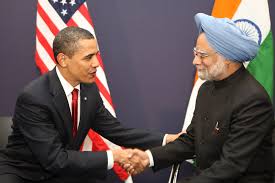
It was under Manmohan Singh that India-US ties reached a truly transformative phase, putting the two nations on a path of strategic partnership built on long-term alignment. Singh’s tenure coincided with the US “pivot to Asia,” thereby bolstering the relationship. The landmark 2005 US–India Civil Nuclear Agreement ended India’s isolation from global nuclear trade, giving it recognition as a responsible nuclear power outside the NPT. Defence, trade, IT, and outsourcing ties expanded, though differences over climate change, intellectual property, and trade barriers remained. President George W. Bush often described India as a “natural ally,” echoing Vajpayee’s earlier phrase.