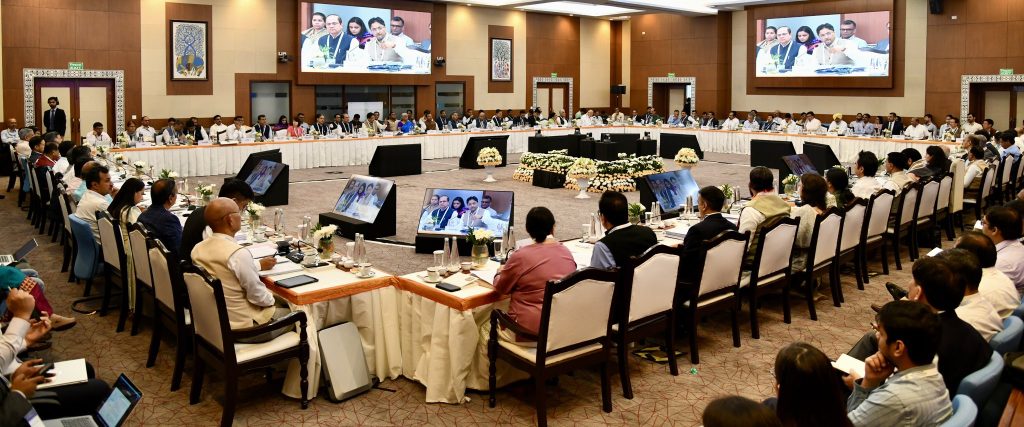
The 56th meeting of the Goods and Services Tax (GST) Council, chaired by Union Finance and Corporate Affairs Minister Nirmala Sitharaman, announced sweeping reforms aimed at providing relief to households, the middle class, and businesses while tightening tax treatment on tobacco and luxury goods.
Meeting at Sushma Swaraj Bhavan, the Council unveiled a wide-ranging package of rate rationalizations, procedural reforms, and institutional measures, calling it a “historic step” toward strengthening the GST framework.
A large basket of essential goods saw GST rates slashed to 5 per cent or even nil. Everyday food items such as Ultra High Temperature (UHT) milk, paneer, butter, cheese, pasta, biscuits, namkeens, fruit juices, and plant-based milk will now attract significantly lower taxes.
Medical essentials including oxygen, diagnostic kits, glucometers, and over 100 critical drugs have also been moved to the 5 per cent or nil bracket, aiming to reduce healthcare costs.
Farm and rural economy inputs received special focus, with tractors, tyres, pumps, irrigation sprinklers, and composting machines moved to a 5 per cent slab. Handicrafts, toys, renewable energy devices, and eco-friendly packaging materials also benefit from reduced GST, a move likely to encourage domestic industries.
In a measure to ease education and publishing, exercise books, notebooks, and maps have been exempted from GST.
On the flip side, sin goods and luxury consumption faced sharp hikes. Pan masala, gutkha, cigarettes, and unmanufactured tobacco will now attract a 40 per cent GST plus compensation cess, replacing the earlier 28 per cent. Similarly, caffeinated drinks, carbonated beverages, luxury cars, big motorcycles, yachts, and private aircraft were pushed into the 40 per cent tax bracket.
The Council also decided GST would now be levied on the retail sale price of tobacco products, closing loopholes in valuation.
The revised rates on most goods and services will take effect from September 22, 2025. However, the existing higher rates on tobacco and related products will continue until compensation cess loan repayments are completed, with the Finance Minister empowered to decide the transition timeline.
A major announcement was the operationalization of the GST Appellate Tribunal (GSTAT) by September-end. The Tribunal will begin hearing cases by December 2025, with June 30, 2026 set as the deadline for filing backlog appeals. The Principal bench will also function as the National Appellate Authority for Advance Ruling, aiming to bring consistency in interpretations and faster dispute resolution.
The Council also endorsed administrative reforms, including a system-driven 90 per cent provisional refund for exporters and industries facing inverted duty structures.
The Council described these measures as a balance between relief for households and stability for revenue.
With GSTAT set to become functional, industry stakeholders expect greater clarity and reduced litigation, marking what many see as a turning point for India’s indirect tax system.