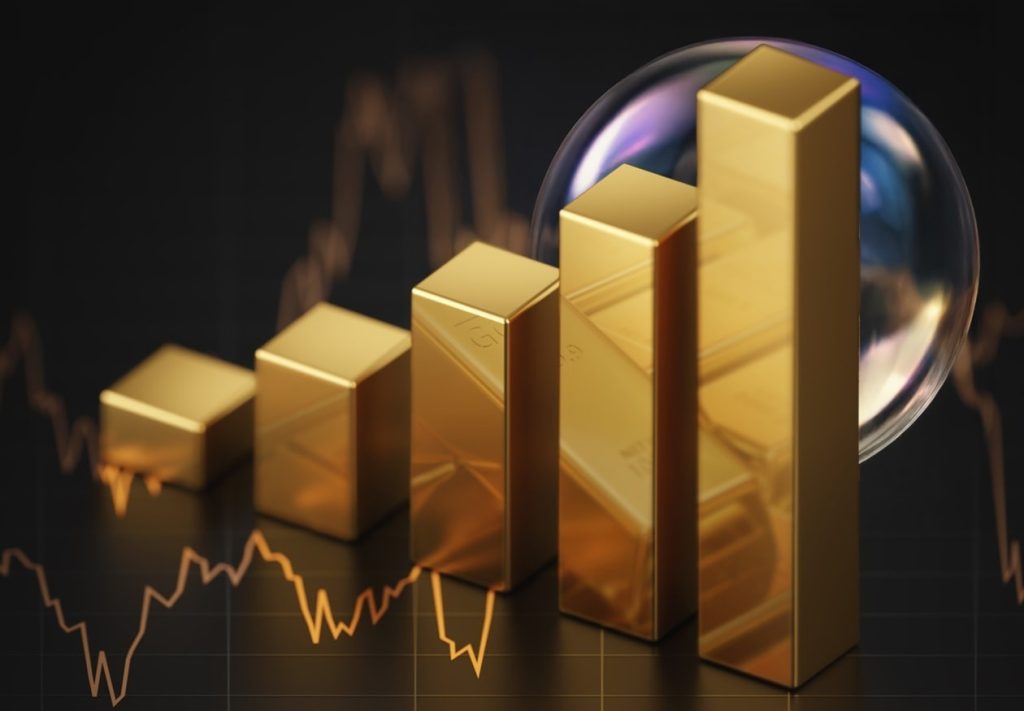
By Tuesday, gold prices had soared to unprecedented levels, nearing $4,000 per ounce. Reports confirmed that prices reached $3,948 before climbing even higher to close at $4,007.90. Analysts believe the rally could continue if certain market conditions align—particularly if investors shift capital from the U.S. Treasuries into gold. Goldman Sachs suggests such a move could push gold to even greater heights.
This dramatic surge reflects more than mere market speculation. Many experts see it as a sign of gold’s renewed role as a safe-haven asset amid rising global instability. Geopolitical tensions, especially the ongoing Russia-Ukraine war and the Israel-Gaza conflict, have been major drivers of increased demand.
Additional factors fuelling the rally include fears of a U.S. government shutdown, expectations of Federal Reserve rate cuts, and a weakening dollar. Concerns over the Fed’s independence and ballooning global debt have further enhanced gold’s appeal. According to the World Gold Council, gold demand rose 3% in Q2, largely driven by central bank buying and robust ETF inflows, however, high prices have dampened demand for gold jewellery, including in India
In India, gold is at record highs. On the Multi Commodity Exchange (MCX), gold futures recently surpassed Rs 1,20,900 per 10 grams. In several cities, spot prices of 24-carat gold breached historic levels, however, data shows India’s overall gold consumption dropped around 10% in Q2 2025 compared to the previous year. Soaring prices discouraged jewellery purchases but investment demand remains strong, particularly through gold bars, coins, and exchange-traded funds.
The rupee is also under pressure, with increased gold imports—driven by festive and wedding season demand—weighing on the currency. Despite the bullish sentiment, some analysts warn of a growing risk that a gold price bubble may be forming. While gold is traditionally seen as a stable store of value, its rapid ascent has raised concerns about sustainability. Bubbles typically emerge when prices far exceed intrinsic value, driven more by emotion and speculation than by fundamentals.
If core drivers such as rate cuts, geopolitical risks, or central bank buying lose momentum, gold could face a sharp correction. A sudden shift can trigger a 10–25% pullback—not a collapse but a drop reflecting volatility typical of overbought markets. And as history shows, even gold is not immune to corrections.