In a move that has triggered both intrigue and scepticism, the government has introduced the G-RAM-G Bill as a replacement for the much-loved MGNREGA (Mahatma Gandhi National Rural Employment Guarantee Act). While the name change might seem superficial, the underlying shift is significant.
The transition from MGNREGA to G-RAM-G is not just a rebranding but a rethinking of how rural development and employment will be handled in India. The new Bill promises to offer a more modern, effective, and sustainable framework, but questions about its long-term impact and effectiveness remain.
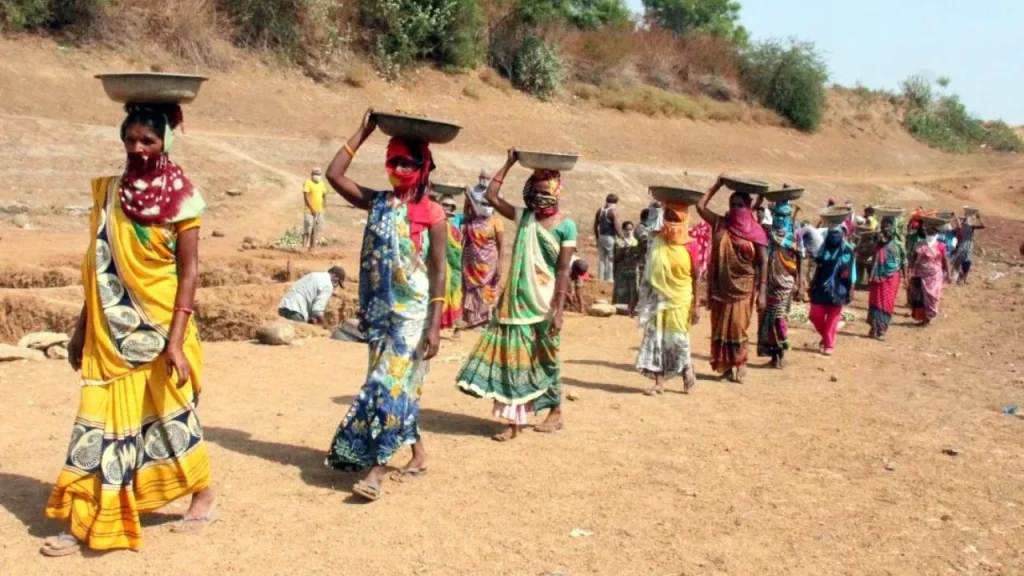
Before Tehelka delves into the specifics of the G-RAM-G Bill, it’s important to first understand the significance of MGNREGA, which has been a key part of India’s rural development strategy since its inception in 2005. MGNREGA was established with the goal of guaranteeing at least 100 days of wage employment per year to rural households, thereby alleviating poverty and boosting rural infrastructure.
Key Features of MGNREGA:
- Employment Guarantee: MGNREGA guarantees 100 days of work per household in rural areas. This was revolutionary at the time of its launch because it provided an income safety net to the rural poor, particularly during lean agricultural seasons.
- Focus on Rural Infrastructure: The program has created thousands of kilometers of rural roads, irrigation systems, and water conservation projects. It encouraged community-driven projects that were often designed by local villagers themselves.
- Decentralized Implementation: One of the standout features of MGNREGA was its decentralization. It allowed for local bodies like Panchayats to play a role in project planning and execution, making the program more locally relevant and responsive.
- Wage Payment: The payment was often made through direct bank transfers, which aimed to provide transparency and reduce corruption. However, delays in payments and inefficiencies in disbursing funds were common criticisms.
Despite its successes in alleviating poverty and creating rural infrastructure, MGNREGA had its share of problems. Implementation challenges such as wage delays, corrupt practices, and misuse of funds persisted. The program was also often criticized for not providing sufficient skills development or sustainable long-term economic growth. These limitations likely contributed to the shift toward the G-RAM-G framework.
The G-RAM-G Bill:
The G-RAM-G Bill, while sharing some similarities with MGNREGA, brings new dimensions to rural employment and development. The name itself — G-RAM-G — is symbolic of a shift in focus from Mahatma Gandhi (whose name has been used to represent rural welfare) to RAM, an acronym that signifies a new approach: Rural Agricultural and Manufacturing Growth. The introduction of RAM indicates a broader vision that moves beyond mere employment to creating self-sustaining rural economies
Salient Features of the G-RAM-G Bill:
- Broader Economic Focus: Unlike MGNREGA, which primarily focused on creating manual labor opportunities, G-RAM-G emphasizes a holistic economic approach. The bill aims to integrate agriculture and manufacturing to provide long-term growth opportunities. This is aligned with the government’s vision of a “Atmanirbhar Bharat” (self-reliant India), encouraging rural communities to become self-sustaining in various sectors.
- Skilled Employment: One of the major changes is the focus on skill development. G-RAM-G intends to create a workforce that is not only involved in manual labor but is also equipped with vocational and technical skills. Training in areas like agri-tech, machine operations, and digital literacy will be key components. This upskilling would ideally make rural workers more employable in diverse sectors.
- Technology Integration: G-RAM-G aims to bring in technological innovation. The program encourages the use of drones, satellite mapping, and mobile apps to enhance productivity, manage resources, and ensure transparency. This focus on technology could transform the rural economy by optimizing resource management and increasing agricultural yields.
- Private Sector Involvement: Another key difference is the increased role of the private sector. While MGNREGA was predominantly a government-run initiative, G-RAM-G encourages private-public partnerships (PPPs) to create better infrastructure and long-term employment opportunities. This could include collaborations with agri-businesses, manufacturing companies, and even tech startups.
- Rural Entrepreneurship: Instead of focusing solely on wage labor, G-RAM-G also places a significant emphasis on fostering entrepreneurship in rural areas. The bill includes provisions for low-interest loans and grants to encourage small businesses, local manufacturing, and agri-startups. This shift aims to generate not just employment but also wealth in rural communities.
- Sustainability and Green Initiatives: The G-RAM-G Bill emphasizes sustainability by encouraging green practices. Rural development under this framework will prioritize eco-friendly methods in agriculture, water conservation, and energy use. Projects like organic farming, renewable energy solutions, and waste-to-energy technologies will be promoted.
- Increased Fund Allocation and Monitoring: The new bill provides for better fund management and allocation. While the government promises more funding for G-RAM-G compared to MGNREGA, the monitoring of the fund’s use will be more stringent. Technology-driven monitoring systems are expected to improve transparency and reduce the chances of misuse of resources.
- Performance-based Incentives: G-RAM-G also includes an innovative approach to performance-based rewards. If local bodies and communities meet specific goals, such as increasing agricultural productivity or boosting manufacturing output, they will receive incentives in the form of additional funding or grants for new projects.
G-RAM-G vs MGNREGA: A Comparative Analysis
- Nature of Employment: MGNREGA was primarily about providing wage-based employment, often in the form of manual labor. G-RAM-G, on the other hand, seeks to diversify rural employment by integrating agriculture, manufacturing, and entrepreneurship. The focus shifts from merely providing temporary employment to creating sustainable, skill-based employment opportunities.
- Role of Technology: While MGNREGA made some use of technology for fund transfers and project monitoring, G-RAM-G intends to harness cutting-edge technology for resource management, agricultural improvements, and digital training. The integration of AI, drones, and mobile platforms is aimed at transforming how rural projects are planned and executed.
- Long-term Economic Goals: MGNREGA’s focus was primarily on immediate relief through wages and infrastructure projects. G-RAM-G, however, is designed to foster long-term economic development by promoting skill-building, entrepreneurship, and rural manufacturing. It aligns more closely with India’s aspirations to become a self-sufficient economy.
- Private Sector and Entrepreneurship: The G-RAM-G Bill is more attuned to the idea of rural entrepreneurship and partnerships with the private sector. MGNREGA, in contrast, remained more government-centric, with limited involvement from the private sector. The move towards fostering businesses in rural areas could stimulate innovation and create diverse income sources for the population.
- Funding and Efficiency: One of the criticisms of MGNREGA was the inefficient use of funds and the delay in payments. G-RAM-G promises more rigorous financial oversight, along with the introduction of performance-based incentives, which could improve the program’s overall effectiveness.
Crux:
The shift from MGNREGA to the G-RAM-G Bill marks a pivotal moment in India’s approach to rural employment and development. By focusing on skill development, entrepreneurship, and technology, G-RAM-G aims to transform rural India into a hub of sustainable growth.
However, questions remain about whether the government can effectively implement this ambitious plan. The success of G-RAM-G will depend on local capacities, the willingness of communities to adopt new technologies, and the ability to foster genuine public-private partnerships.
In summary, while MGNREGA will always be remembered as a landmark initiative in rural welfare, the G-RAM-G Bill offers a bold new direction. It promises to bridge the gap between rural poverty and self-sufficiency — but the journey from theory to practice will be a challenging one. Whether it will live up to its ambitious goals remains to be seen.