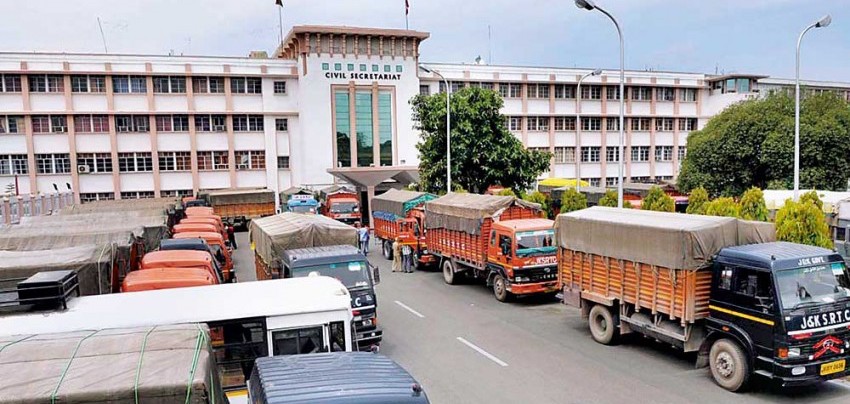
After a four-year hiatus, the century-and-a-half-old practice of the Darbar move—symbolizing the unity of Jammu and Kashmir—was revived in October, with Chief Minister Omar Abdullah walking to the Civil Secretariat in Jammu amid cheers, flower showers, and beating drums. For many, the moment carried emotional and historical resonance. Traders and ordinary citizens viewed it not just as the return of an administrative ritual, but as the restoration of a tradition that tied the two regions together—economically, culturally, and symbolically.
The Darbar move dates back to the 1870s, when the Dogra rulers instituted the biannual shifting of the capital between Srinagar and Jammu. The move ensured that both regions received administrative attention and that officials worked in climatic comfort—Srinagar in summer, Jammu in winter. More importantly, it was a political device to integrate two distinct regions with different geography, demography, and temperament. The practice outlasted monarchy and continued through the democratic era, surviving wars, insurgencies, and political upheavals.
That continuity was broken in 2021, when the administration under Lieutenant Governor Manoj Sinha scrapped the tradition, citing cost and efficiency. Officials claimed that the e-office system had rendered physical relocation unnecessary and that the state could save nearly Rs 200 crore annually. The decision, however, provoked strong reactions in Jammu. The region’s traders, hotel owners, and transporters argued that the end of the move struck at the heart of their economy.
Indeed, for decades, Jammu’s winter economy has thrived on this seasonal migration. Thousands of government employees, their families, and support staff relocating from the Valley turned Jammu into a bustling hub for five months every year. The influx created demand for rental housing, transportation, hospitality, and retail services. Restaurants filled, hotels ran at full capacity, and markets along Residency Road and Raghunath Bazar came alive with shoppers. When the move was halted, Jammu’s traders said, the city fell eerily quiet.
The return of the move this year, therefore, represents more than nostalgia—it reflects the economic interdependence between the two regions. While politics often pits Jammu and Kashmir against each other, economics quietly binds them. This interdependence was visible in the rousing welcome Omar Abdullah received from traders, many of whom are otherwise aligned with the BJP. By reviving the move, Abdullah not only restored an emotional tradition but also ensured a tangible economic lifeline for the Jammu region.
The timing of the decision is also politically astute. The 2024 Assembly elections once again exposed the deep political polarization between the two regions: the National Conference swept the Valley, while the BJP dominated Jammu. This sharp divide reinforced the perception that Jammu and Kashmir remain two separate political worlds with conflicting aspirations. Yet, beneath this divide lies an undeniable economic reality—Jammu’s prosperity, particularly in the winter months, is tied to Kashmir’s presence. The Darbar Move, in that sense, acts as a bridge, softening political antagonism through economic necessity.
Omar Abdullah, in defending the move, captured this balance succinctly. “Not everything should be measured in monetary terms,” he told reporters. “Some things hold emotional significance.” His statement underlines a deeper truth: that the move’s value lies not just in symbolism, but in sustaining the lived connections that link the two regions.
Of course, the practical challenges remain. The logistics of transporting files, maintaining administrative continuity, and ensuring cost efficiency will always be debated. Yet, the benefits—economic, psychological, and political—arguably outweigh the expenditure. The Move reinforces a sense of shared space and seasonal coexistence, countering the narrative of separateness that has long haunted Jammu and Kashmir’s politics.
Ultimately, the Darbar Move endures because it embodies an unspoken compact: that despite political divergence, the destinies of Jammu and Kashmir remain intertwined. The practice may have begun as a royal convenience, but over time it has evolved into an expression of regional interdependence—where economics tempers politics and tradition sustains unity.