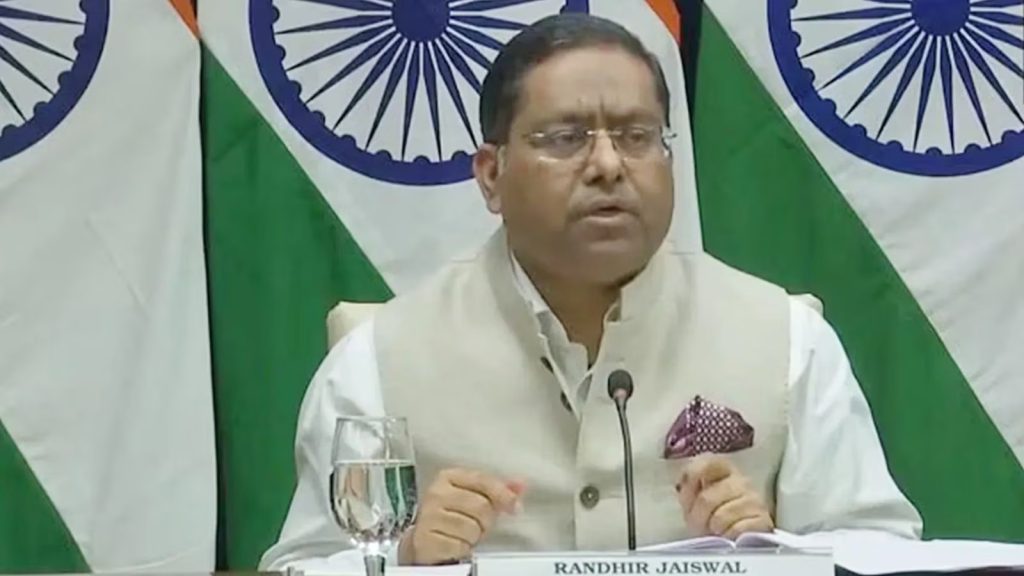
In a recent statement, India’s Ministry of External Affairs (MEA) has expressed deep concern and disappointment over the demolition of a Hindu deity statue that was located in a disputed area along the Thailand-Cambodia border. External Affairs Ministry spokesperson Randhir Jaiswal described the act as “disrespectful” and emphasized that it had caused widespread hurt among the global community of followers of the Hindu faith.
The statue, which was of significant cultural and religious importance to the Hindu community, was reportedly destroyed during clashes between Thailand and Cambodia in a disputed region. The border disagreement has been a source of tension between the two Southeast Asian nations for years, but the destruction of the religious symbol has escalated tensions further, drawing international condemnation.
The border conflict between Thailand and Cambodia dates back several decades and has revolved around the ownership of a small but culturally significant stretch of land near the Preah Vihear Temple, a UNESCO World Heritage site. This area, rich in history, holds deep religious significance to both Cambodia and Thailand, and the temple itself is revered as a sacred place of worship for Hindus, particularly for those of the Shaiva tradition.
The statue, believed to be an effigy of Lord Shiva, was a symbol of religious and cultural heritage, reflecting the shared historical ties between the two nations. It was placed near the Preah Vihear Temple area, which has been a point of contention. The 2008 World Court ruling gave Cambodia ownership of the temple, but Thailand contests the ruling and disputes sovereignty over the surrounding land.
In recent months, border tensions have resurfaced, with both countries engaging in diplomatic exchanges as well as military posturing over control of the region. The demolition of the statue appears to have been an unfortunate consequence of these escalated tensions.
In response to the incident, Randhir Jaiswal, the spokesperson for India’s External Affairs Ministry, called the act a violation of cultural respect and international norms. “The demolition of a religious idol, particularly one of such significance, is deeply distressing. It is not only an affront to the Hindu community but to all those who believe in the values of mutual respect, tolerance, and cultural heritage,” Jaiswal stated.
The MEA also urged both Thailand and Cambodia to resolve their border dispute through peaceful dialogue and diplomacy. “We encourage both parties to engage in constructive dialogue and seek peaceful solutions in accordance with international law,” Jaiswal added. India’s call for diplomacy highlights its long-standing policy of supporting peaceful conflict resolution and fostering regional stability in Southeast Asia.
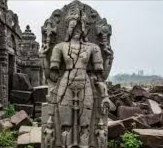
The destruction of the statue has sparked outrage among Hindu religious leaders and the global Hindu diaspora. Many have taken to social media to express their anger and disappointment, calling for stronger diplomatic interventions. Several prominent Hindu organizations have condemned the act, asserting that it not only disrespects Hinduism but also undermines the broader ethos of interfaith respect and understanding.
“This is not just an attack on a religious symbol, but an attack on the very values that promote peaceful coexistence,” said Ramesh Reddy, an advocate for Hindu religious rights. “Hindu deities, especially Lord Shiva, hold great significance not only in India but across the world, and this act has hurt millions of Hindus globally.”
Hindu temples and cultural organizations in several countries, including India, the United States, and the United Kingdom, have called for international action to hold those responsible for the act accountable. Some have even petitioned for a global campaign to rebuild the statue and restore the religious significance of the site.