The breakdown shows snowmelt dominates, supplying 64% of annual flow, but its share is declining; peak discharge has shifted from August to July, driven by reduced winter precipitation and earlier summer melting. These changes in meltwater seasonality can have severe implications for hydropower generation, irrigation, and water security at higher elevations, as per an IIT Indore study
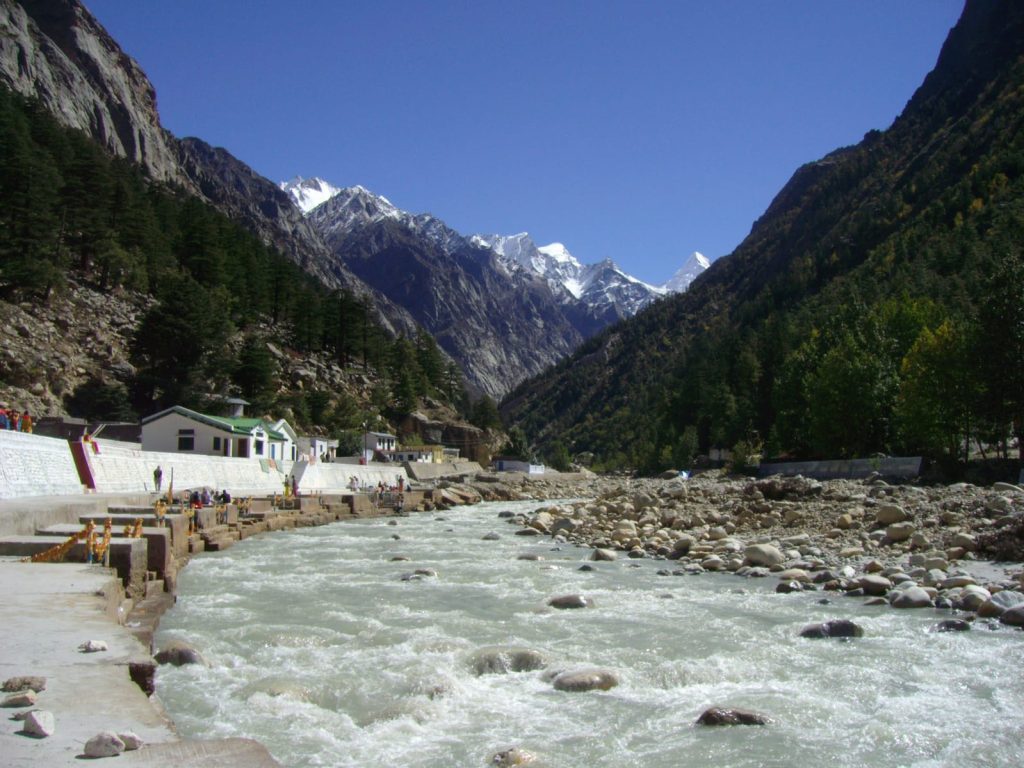
Climate change is reshaping the Gangotri Glacier System (GGS) — the source of the Ganga, according to a new study ‘Hydrological Contributions of Snow and Glacier Melt from the Gangotri Glacier System and Their Climatic Controls Since 1980’ led by researchers at IIT Indore.
With debates on water security and Himalayan disasters intensifying, the study provides fresh insights into how a warming climate is transforming the Ganga at its very source, authors say, urging for sustained field monitoring and the integration of high-resolution climate projections to refine future forecasts from glacierised basins
Using data from four decades (1980–2020) and advanced hydrological modelling, the study finds that snowmelt remains dominant at 64% of annual flow, but its share is declining.
Glacier melt contributes 21%, with rainfall-runoff (11%) and baseflow (4%) increasing, also since the 1990s, peak discharge has shifted from August to July, driven by reduced winter precipitation and earlier summer melting. The changes in meltwater seasonality can have severe implications for hydropower generation, irrigation, and water security at higher elevations.
The Gangotri Glacier System (GGS) feeds one of India’s largest rivers— Ganga
Scientists modelled Gangotri’s meltwater over four decades and analysed how climate change is reshaping its components. Using the high-resolution Spatial Processes in Hydrology (SPHY) model, calibrated with field discharge records, geodetic satellite-derived glacier mass balance data and snow cover maps, researchers analysed the composition of Gangotri’s streamflow from 1980 to 2020, according to a statement
The breakdown shows snowmelt dominates, supplying 64% of annual flow, followed by glacier melt (21%), rainfall-runoff (11%), and baseflow (4%).
“Over the last four decades, the composition of flow from the GGS is changing due to climate change, and this study offers the most detailed picture yet of how those changes have unfolded over the past four decades,” says lead author Parul Vinze from the Glaci-Hydro-Climate Lab, IIT Indore.
“After 1990, the discharge peak in GGS shifted from August to July, linked to reduced winter precipitation and earlier summer melting, she adds.
Though the flow from GGS is snowmelt-dominated, over time, snowmelt has declined, while rainfall-runoff and baseflow edged upward, subtly reshaping the basin’s hydrological balance.
“Earlier studies, while valuable, were often limited by shorter records, coarser-resolution climate data, or fewer calibration datasets. This study builds on that foundation, providing a 41-year perspective and a more detailed analysis than has previously been possible, offering clearer estimates of the relative contributions of snowmelt, glacier melt, rainfall-runoff, and baseflow which have varied across earlier research,” researchers say.
“Accurate modelling, backed by field data, is key for predicting future water availability in the Himalaya,” says Dr. Mohd. Farooq Azam, Associate Professor, IIT Indore.
The authors urge sustained field monitoring and the integration of high-resolution climate projections to refine future forecasts from glacierised basins. Overall, the Ganga River has relatively less meltwater contribution at a basin-wide scale compared to the Indus Basin, yet at the higher elevations such as the Gangotri Catchment, the runoff is dominated by meltwater, and the observed changes in meltwater seasonality and runoff volume would severely affect hydropower generation and irrigation at higher elevations, says Dr. Azam.