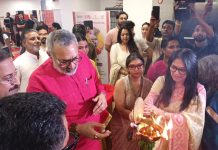
Former Enforcement Directorate deputy director Niranjan Singh’s decision to walk away from the Akali Dal Waris Punjab De just four days after joining it has added a fresh twist to Punjab’s increasingly fluid political landscape.
Singh, who had joined the outfit on September 23 along with former Punjab Police DSP Balwinder Singh Sekhon, announced his disassociation citing “non-negotiable” differences. He said he had supported the organisation over issues such as Punjab’s drug menace, corruption, gangsters, extortion and alleged involvement of police personnel in drug trafficking, but could not compromise on certain other issues.
“The conduct of persons in public life has to be within the Constitution of India,” Singh said in a social media post, while wishing the organisation well.
The former ED officer subsequently clarified that his differences were linked to what he described as the organisation’s unclear position on the legitimacy of the Constitution. He said his decision was conscious and not a hasty one.
The abrupt reversal is significant because Singh had only days earlier publicly explained why he chose to associate himself with the Amritpal Singh-led organisation. He had said Punjab’s worsening drug problem, corruption and law-and-order situation had compelled him to enter politics despite not considering himself a political person.
Singh’s background had given his entry particular weight. He retired from the Enforcement Directorate in May 2021 after handling several high-profile investigations relating to drug trafficking in Punjab, including the multi-crore Jagdish Bhola drug racket case. During his service, he also questioned senior political figures in investigations under the Prevention of Money Laundering Act.
His decision to initially join Waris Punjab De was therefore projected as an attempt to bring his experience of investigating organised crime and the drug trade into the political arena. At the time, he had argued that successive governments had failed to deal effectively with Punjab’s drug crisis.
But the four-day association has now ended in a public disagreement over principles. The organisation, meanwhile, has challenged the suggestion that it lacks a constitutional position.
Dakha MLA and party leader Manpreet Singh Ayali said the party had not received any formal communication from Singh explaining his departure. He also suggested that Singh might have been under pressure, questioning why someone would join the organisation, speak positively about it and then leave within four days.
Party leader Mandeep Singh Sidhu rejected Singh’s contention that Waris Punjab De did not have a clear position on the Constitution. He pointed to the organisation’s participation in the electoral process and to Amritpal Singh taking oath as an elected MP.
Sidhu described Singh’s argument as misleading and said the party was fighting a democratic electoral battle. The conflicting explanations have turned what initially appeared to be a high-profile political induction into an early test of the organisation’s ideological positioning.
The controversy comes at a time when Waris Punjab De is attempting to expand its political footprint ahead of the 2027 Punjab Assembly elections.
Led by jailed Khadoor Sahib MP Amritpal Singh, the organisation is seeking to build a base around issues including drugs, corruption, governance and Sikh political concerns. It has announced its intention to contest all 117 Assembly seats, although the organisation is yet to be formally registered as a political party.
Among those announced as candidates are Lakha Sidhana from Maur, Mandeep Singh Sidhu, brother of late actor-activist Deep Sidhu, from Talwandi Sabo, Papalpreet Singh from Majitha and Satwant Singh, son of Kehar Singh, from Bassi Pathana.
The organisation’s emergence comes against the backdrop of a weakened Shiromani Akali Dal and an increasingly fragmented political field in Punjab. Its attempt to attract Panthic votes has made its political trajectory one of the factors to watch in the run-up to the Assembly elections.
BJP’s wider Punjab strategy
The developments surrounding Waris Punjab De are also unfolding amid broader political manoeuvring in Punjab.
The BJP has been making efforts to strengthen its outreach among influential religious and social organisations. Prime Minister Narendra Modi’s visit to Dera Sachkhand Ballan in Jalandhar, where he met its spiritual head Sant Niranjan Dass, was followed by visits by senior BJP leaders. Haryana Chief Minister Nayab Singh Saini and Punjab BJP president Kewal Singh Dhillon also visited the Radha Soami Satsang Beas headquarters and met its chief, Baba Gurinder Singh Dhillon.
Dera Sacha Sauda, although headquartered in Haryana, also has a substantial following in Punjab. Its jailed chief Gurmeet Ram Rahim Singh has remained a politically relevant figure in the state, with his paroles repeatedly generating controversy.
At the same time, there have been reports of the BJP exploring the possibility of an alliance with the Shiromani Akali Dal. Any such realignment would further complicate the political calculations of other emerging players seeking space among Punjab’s traditional Panthic electorate.
Against this backdrop, Waris Punjab De’s attempt to build a state wide political presence assumes greater significance.
Singh’s brief association with the outfit does not, by itself, establish anything about the wider political strategy of the BJP or any other party. However, the episode highlights the ideological and constitutional questions that could confront Waris Punjab De as it moves from a social and activist platform towards electoral politics.
The organisation wants to expand beyond its existing support base and contest a large number of seats. To do that, it will have to navigate questions surrounding its political identity, constitutional position and the diverse constituencies of Punjab.
For Singh, those questions appear to have become decisive within days.
His departure therefore leaves behind a sharper political question than the one created by his joining: Can Waris Punjab De broaden its electoral appeal while resolving the ideological differences that may emerge as it transforms itself into a statewide political force?
With the 2027 Assembly elections approaching, Punjab’s political chessboard is already crowded. Niranjan Singh’s four-day journey into—and out of—Waris Punjab De has added another intriguing piece to it.