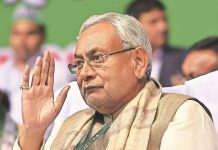
The Bihar Assembly elections of 2025 concluded with a record voter turnout of approximately 67%, signalling a dramatic shift in one of India’s most politically significant states.
Ahead of the results on November 14, a series of exit polls from top agencies are projecting a resounding win for the ruling National Democratic Alliance (NDA), led chiefly by Chief Minister Nitish Kumar’s Janata Dal (United) and the Bharatiya Janata Party (BJP).
The majority of these exit polls predict that the NDA will comfortably cross the majority threshold of 122 seats in the 243-seat assembly, ranging between 130 and 167. Meanwhile, the opposition Mahagathbandhan alliance, led by Tejashwi Yadav’s Rashtriya Janata Dal (RJD) and Congress, is forecast to lose ground, with its combined tally dropping to the 70–102 range, far short of the 110 seats it secured in the last elections. As for Prashant Kishor’s Jan Suraaj Party, which made its debut in the Bihar Assembly elections, it is predicted to have little to no electoral impact.
Error margin
Exit polls come with a certain degree of error, meaning that the exact seat count may fluctuate. Whether a rain of freebies. especially for women, or the election strategy of the ruling side, the opposition faced a lopsided challenge in these elections. So if the NDA wins, it will not come as a surprise to its supporters but discrepancies are known to exist in exit polls due to diverse factors, including sampling limitations like voter turnout variations and the reluctance of respondents to disclose true voting preferences.
Talking specifically of Bihar, there have been exit polls that missed the mark, highlighting the inherent challenges in polling such a complex electorate. For example, in the 2015 Bihar elections, exit polls appeared to underestimate the magnitude of the Mahagathbandhan coalition’s victory. Conversely, in 2020, the polls predicted a win for the Mahagathbandhan with around 125 seats, whereas the actual results favoured the NDA.
The point is, exit polls serve as useful indicators, but the tendency to oversimplify complex electoral sentiments may lead to surprising outcomes.
Exit polls in India have gone seriously wrong on several notable occasions, most recently in the 2024 general election, where the majority of polls predicted a major landslide for the ruling BJP-led NDA alliance, estimating over 350–400 seats, but the actual outcome was lower at around 295 seats for the NDA and 240 for the BJP.
In the Delhi Assembly 2015 and Chhattisgarh Assembly 2023 elections also exit polls failed to capture the essence. Experts attribute the error to factors like faulty sampling, lack of updated census data, voter preference falsification, and possible media or surveyor bias etc. The bottom line is exit polls in India have a mixed track record and their results should be viewed with skepticism, especially in the context of tightly contested or complex elections. Meanwhile, all eyes are on November 14.