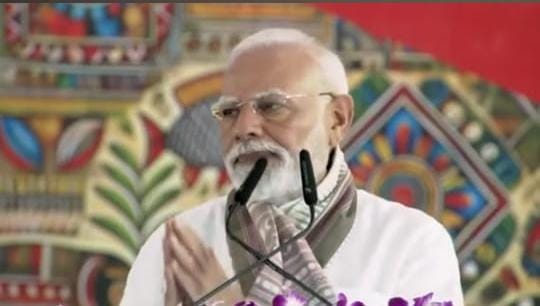
At a time when politicians should be focusing on employment, migration, development, and law and order, building narratives around personal insults and the “katta” in Bihar 2025 appears to be a strategic diversion from larger issues. Ahead of the first phase of elections on November 6, by highlighting ‘katta’, Prime Minister Narendra Modi has tried to shift attention and public debate toward emotions and issues other than critical concerns, say critics.
On Monday, Congress chief Mallikarjun Kharge and party MP Priyanka Gandhi Vadra hit back at Modi over his “katta” remark. Addressing a public rally, Kharge questioned Modi’s claim that the RJD forced the Congress to concede the chief minister’s post in the INDIA bloc, asking, “Was Modi Ji present when Tejashwi Yadav was announced as the CM face?” Modi had alleged, “RJD ne Congress ki kanpatti par katta rakh kar CM pad chura liya,” implying that the RJD snatched the chief minister’s post from the Congress by holding a gun to its head.
Kharge also predicted that the BJP would “throw Bihar Chief Minister and JD(U) president Nitish Kumar out like a fly from milk” after the assembly polls. Mocking the NDA’s manifesto launch, he said the event ended “in 36 seconds — faster than instant coffee,” claiming Nitish had been “hijacked” by the BJP.
Addressing rallies. Priyanka Gandhi ridiculed Modi’s repeated claims that opposition leaders insult the nation. She suggested he form a new “Apmaan Mantralaya” (Ministry of Insult) to catalog everyone who had allegedly disrespected him or the country. “It could also keep records of daily insults hurled at my family by the ruling party—enough to fill a library,” she added, accusing Modi of distracting from pressing issues such as unemployment and poverty.
PM Modi’s “katta” remark was a sharp political swipe aimed at the RJD and its ally, the Congress. The term “katta”, a colloquial reference to a country-made pistol, is commonly used in Bihar political slang to denote intimidation or coercion. Supporters say Modi intended to highlight what he called the weakness and lack of internal democracy within the INDIA bloc, portraying the alliance as fractured and dominated by one party’s aggressive tactics.
Basically, the PM tried to connect with local idioms familiar to Bihar voters while reinforcing the BJP’s message of unity, order, and decisive leadership and underlining his party’s broader campaign narrative: that opposition parties are bound by convenience rather than conviction. This is not all, earlier during the 2025 Bihar election campaign, PM Modi also invoked alleged remarks made about his mother at an opposition rally, calling the comments not just a personal insult but “an insult to all mothers, sisters, and daughters of India.”