West Bengal today represents one of the most striking contradictions in Indian democracy. It is a state where political participation is intense, cultural consciousness is deep, and electoral battles are fought with passion rarely seen elsewhere. Yet, it is also a state where economic stagnation persists, institutions weaken steadily, and public services struggle to meet basic expectations. Bengal votes with its heart—but it increasingly suffers with its body.
The events in Kolkata last week, where a sharp confrontation unfolded between the ruling Trinamool Congress and the Enforcement Directorate over investigations linked to a senior TMC strategist, were not isolated developments. They were symptomatic of a deeper and long-running crisis in Bengal’s political life. Once again, the streets filled with protests, counter-protests, slogans against Delhi, accusations of vendetta, and appeals to Bengali pride. Once again, the state’s politics dominated headlines while governance quietly receded into the background.
This pattern is not new. Kolkata has witnessed such scenes for decades. Power struggles are played out theatrically in public spaces, while the lived realities of citizens—employment, healthcare, education, infrastructure—remain secondary. Governments change, slogans change, and adversaries change, but the architecture of power remains largely untouched. The same beneficiaries adapt, the same intermediaries survive, and the same mechanisms of control continue. The people, meanwhile, remain spectators to a political carousel that never quite stops.
My understanding of Bengal is not detached or episodic. I have observed its political evolution closely since the early 1980s, when Calcutta still carried the aura of being India’s cultural and intellectual capital. My parents lived in the city, and my emotional and political understanding was shaped by its atmosphere. I have seen Bengal’s decline not as a dramatic collapse, but as a slow, layered erosion—masked by nostalgia, rhetoric and ideological certainty.
From the era of Congress dominance to the long, rigid rule of the Left, and finally to the rise of the Trinamool Congress, Bengal appears to have witnessed repeated political transformations. In reality, what has occurred is a recycling of power. When the Congress weakened, its local elites adjusted smoothly to the Left. When the Left collapsed under the weight of arrogance, violence and economic stagnation, many of the same organisational structures, local strongmen and political brokers resurfaced under the TMC banner. Ideological loyalty in Bengal has rarely been absolute; access to power has always been the stronger glue.
This is the most uncomfortable truth of Bengal’s politics. People of the old regime rarely disappear; they simply realign. Ideological conversion happens overnight, but influence, protection and privilege remain uninterrupted. This continuity explains why corruption survives every regime, why syndicate culture refuses to die, and why fear continues to be an effective political instrument. Regime change in Bengal has seldom meant systemic reform.
Seen through this lens, the recent ED–TMC confrontation becomes easier to understand. For the ruling party, central agencies are portrayed as instruments of political persecution. For the opposition, they are presented as tools of exposure and accountability. For the ordinary citizen, however, these confrontations inspire neither confidence nor hope. People have seen this cycle too many times. They know that accountability is selective, justice is delayed, and morality is often suspended until power changes hands. Transparency is avoided because opacity sustains patronage—and patronage sustains regimes.
While political energy is consumed by street battles and television debates, fundamental questions remain unanswered. Where is Bengal’s economy heading? What happened to its industrial base? Why has a state with such rich human capital been reduced to exporting its youth as migrant labour? These questions are rarely central to election campaigns because they demand uncomfortable honesty.
Once, West Bengal was a magnet for industry, trade and intellectual exchange. Today, it struggles to attract serious long-term investment. Manufacturing has steadily declined. Large industries exited years ago, scarred by decades of labour militancy, politicised trade unionism, and policy unpredictability. The culture of bandhs and political intervention did not merely disrupt production; it destroyed confidence across generations. What replaced industry was not a robust service economy, but an informal survival system deeply dependent on political patronage.
Welfare schemes expanded and brought relief to many, but without a parallel growth engine they gradually became tools of political loyalty rather than instruments of empowerment. Dependency replaced aspiration. Economic stagnation was softened by emotional mobilisation.
Per capita income figures tell a stark story. States that once looked up to Bengal for cultural and administrative leadership have raced far ahead economically. Bengal’s educated youth increasingly leave the state in search of opportunity and dignity. Migration has become a silent referendum on governance failure. A society that exports its young minds while importing political slogans is not progressing—it is compensating.
Healthcare exposes this reality with brutal clarity. Government hospitals remain overcrowded, understaffed and under-equipped. Every few months, a tragedy reveals systemic failure—patients dying on floors, families running from counter to counter, doctors working under impossible pressure. Private healthcare, on the other hand, is beyond the reach of most families. Health has become either a matter of luck or privilege. No government has treated health infrastructure as a long-term civilisational priority; it appears briefly during crises and vanishes from political memory thereafter.
Education, once Bengal’s pride, has also suffered. Universities that once produced thinkers, reformers and global intellectuals are now deeply politicised. Campuses mirror the intolerance and factionalism of the streets. Academic autonomy has been sacrificed to party loyalty, research output has weakened, and global academic integration remains limited. Bengal still celebrates its intellectual past, but invests inadequately in its intellectual future.
Yet economics and institutions alone do not explain Bengal’s political behaviour. To understand electoral outcomes here, one must understand the centrality of culture, identity and emotion. Bengal’s politics has always been driven as much by sentiment as by policy. From the freedom movement to Left mobilisation and now Trinamool’s sub-nationalist narrative, elections have been won by those who successfully tap into cultural pride and emotional memory.
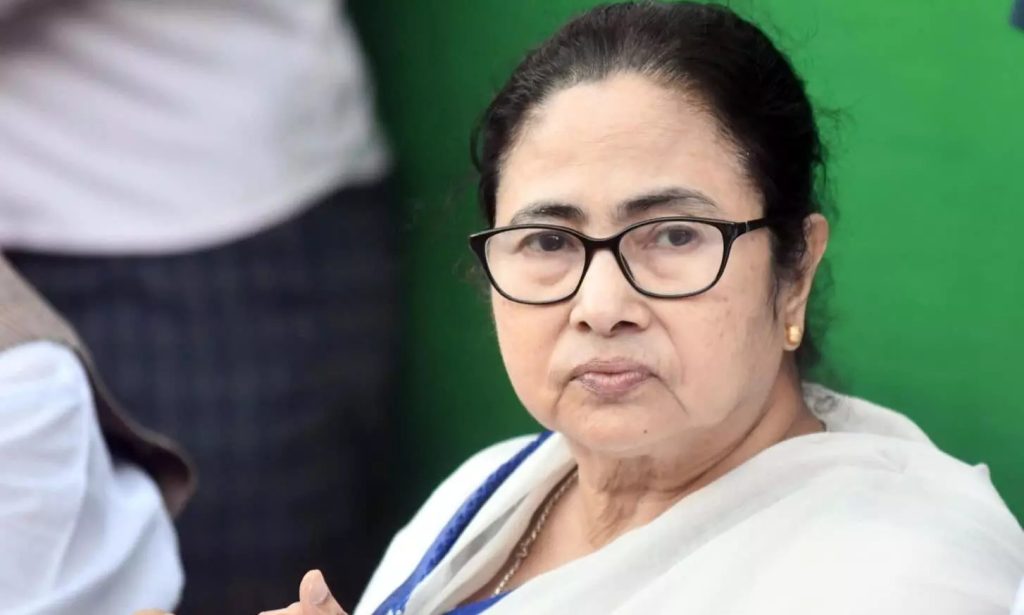
This is where Mamata Banerjee’s political strength lies. Her politics is not managerial; it is emotive. She positions herself as the custodian of Bengali identity, as a fighter standing between Bengal and an allegedly hostile Delhi. Whether one approves of her governance or not, her narrative resonates deeply. She does not merely ask for votes; she claims emotional ownership of the Bengali psyche.
This emotional alignment explains her repeated electoral success despite governance fatigue. Administrative criticism alone has never defeated her because elections in Bengal are not won on administrative arguments alone. They are won in the realm of sentiment.
This is also where the Bharatiya Janata Party continues to struggle. The BJP has approached Bengal largely through a national prism—central leadership, national narratives and ideological templates borrowed from other states. This approach underestimates Bengal’s political psychology. What works in Haryana, Maharashtra or Bihar does not automatically translate to Bengal. Electoral success here requires cultural fluency and emotional credibility, not just organisational strength.
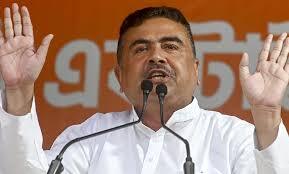
The BJP’s growing desperation to capture Bengal is evident. It feeds on anger against the TMC, on fatigue with long incumbency, and on frustration over corruption and lawlessness. But anger is an unstable political resource. Without a credible, culturally rooted alternative, it dissipates. Beyond electoral arithmetic, the BJP has yet to articulate a Bengal-specific vision that speaks to the state’s unique identity and anxieties.
Power capture without a cultural and economic roadmap will merely reproduce the same patronage politics under a different banner. If the BJP ends up inheriting the same local elites, brokers and defectors, Bengal will witness yet another cosmetic transition. Anger may win seats; it cannot rebuild institutions.
The deeper tragedy is that in this entire political drama, the people of West Bengal are rarely the central concern. Elections are framed as battles between leaders, parties and agencies, not as serious evaluations of governance. Citizenship has slowly been reduced to dependency. When survival is linked to political proximity, democratic agency collapses. People stop asking questions and start negotiating loyalties.
Bengal’s political culture has trained generations to believe that power must be feared or appeased, not questioned. This culture cannot be dismantled by slogans or sudden electoral waves. It requires sustained institutional reform and political courage.
The way forward for Bengal demands a painful but necessary break from old habits. Politics must be separated from everyday survival. Welfare must be rights-based and transparent, not discretionary and conditional. Industry must be welcomed with policy stability, land clarity and labour reform, without ideological rigidity. Institutions—police, universities, hospitals and local administration—must be insulated from party control. Governance must be judged by outcomes, not by loyalty.
For the BJP, the lesson is equally clear. If it wishes to challenge Mamata Banerjee meaningfully in the 2026 Assembly elections, it must first understand Bengal on its own terms. It must engage with Bengali cultural pride respectfully, build credible local leadership, and counter Mamata politically—not merely administratively. Without this recalibration, Mamata Banerjee is likely to return with yet another clean sweep.
As the 2026 elections approach, the real question before West Bengal is not who will rule, but whether the cycle will finally break. If power merely shifts while the same networks survive, the state will continue its slow, dignified decline—rich in memory, poor in momentum.
West Bengal deserves better than endless political musical chairs. It deserves a future where power serves the people, not consumes them. Until that inversion happens, Bengal will continue to vote with its heart—and suffer with its body.
(The author is Editor, STAR Views and Editorial Advisor, Top Story)