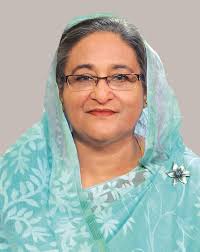
A significant political shift took place in Bangladesh in August last year, culminating in the ouster of Prime Minister Sheikh Hasina. On August 5, 2025, she stepped down and flew to India, landing in Delhi, where she has since sought political shelter. Her departure triggered a sharp downturn in India-Bangladesh relations.
To understand the gravity of the present moment, one must revisit history. Bangladesh was born in 1971 out of a bloody Liberation War against Pakistan, driven by Bengali nationalism and the Mukti Joddha movement. India played a decisive role in that struggle, ultimately defeating Pakistan in war. Today, however, questions are being raised: Do Islamic fundamentalist forces such as Jamaat-e-Islami seek to redefine Bangladesh’s identity? Is there an attempt to reverse the ideological legacy of 1971?
These concerns are particularly relevant as Bangladesh heads into general elections alongside a mass referendum known as the July Referendum. The electorate is casting votes not only for political leadership but also, symbolically, for the nation’s ideological direction.
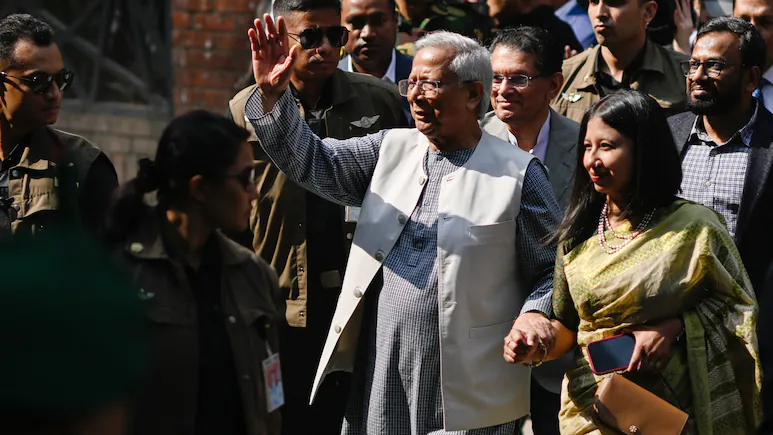
For Prime Minister Narendra Modi, maintaining stable bilateral ties with Bangladesh remains a diplomatic imperative. Despite its relatively small geographical size, Bangladesh occupies a crucial geostrategic position. Pakistan is widely perceived to be seeking renewed influence in Dhaka. In recent months, reports have suggested attempts by the Pakistan Army to strengthen ties with the Bangladesh Army. ISI representatives have reportedly visited Dhaka, and flights between Karachi and Dhaka have resumed under the caretaker government led by Muhammad Yunus. This has led to speculation: Is Yunus steering Bangladesh in a new direction?
At present, the principal political contest is between the Bangladesh Nationalist Party (BNP) and Jamaat-e-Islami. For the first time in the country’s history, Jamaat is contesting the elections independently. Once allied with the BNP, Jamaat now finds itself in direct competition.
The Awami League, led by Sheikh Hasina, has been barred from participating in the elections. Hasina has reportedly instructed party leaders not to contest even as independents, leaving the Awami League symbol absent from the ballot. However, Awami League leaders continue to emphasize the need to prevent Jamaat’s rise.
The BNP, while historically opposed to the Awami League, acknowledges the legacy of the 1971 Liberation War and maintains a relatively trade-friendly stance. Some analysts believe that anti-Jamaat votes may consolidate behind the BNP. Concerns persist that a Jamaat-led government could heighten insecurity for Hindu minorities and tilt Bangladesh closer to Pakistan—developments that would directly affect India’s strategic interests.
Jamaat, however, is running an aggressive campaign, arguing that both the Awami League and the BNP have already been tested in power and found wanting. It presents itself as an ideology-driven alternative, promising clean governance and freedom from corruption. By mobilizing its long-standing student organization, Jamaat is attempting to attract younger voters and position itself as a fresh political force.
New Delhi is responding with caution and calculation. The Modi government opposes Jamaat’s fundamentalist ideology and remains sensitive to the potential impact on Hindu minorities. At the same time, Jamaat leaders have publicly stated that they seek constructive relations with India. “We cannot afford to be anti-Indian,” they have told Indian media, underscoring the economic and geopolitical importance of maintaining ties with a nation of 1.4 billion people.
India’s approach has been measured. The Prime Minister’s Office is closely monitoring developments, while External Affairs Minister S. Jaishankar and National Security Advisor Ajit Doval are actively handling diplomatic channels. India has adopted several key principles:
- It will not interfere in Bangladesh’s electoral process.
- It will maintain diplomatic engagement with whichever party forms the government.
- Cultural and strategic partnerships will continue irrespective of political change.
India has demonstrated similar pragmatic engagement elsewhere, including maintaining dialogue with the Taliban government in Afghanistan when required by diplomatic necessity.
New Delhi is reportedly preparing for four possible scenarios:
- The BNP secures a clear majority and forms the government, with Tarique Rahman potentially assuming leadership.
- Jamaat wins an outright majority and forms the government independently.
- A fractured mandate leads to a coalition government involving the BNP, Jamaat, and student groups.
- A transitional national government emerges under Yunus, supported by major parties and student factions, followed by fresh elections at a later stage.
The Modi government is proceeding with careful strategic calibration, keeping all options open. India’s posture will ultimately adjust to the verdict delivered by the Bangladeshi electorate.
As Bangladesh stands at a political crossroads, the implications extend far beyond its borders. For India, the outcome will shape not only bilateral relations but also the broader geopolitical balance in South Asia.