With the central government retaining the 5 per cent Goods and Services Tax (GST) on the electric vehicles, the industry has welcomed the decision and has said that it will help in decarbonizing the future of India.
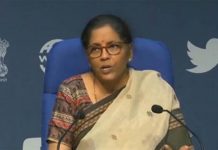
On September 3, the finance minister Nirmala Sitharaman came up with ‘historic’ reforms into the GST for the first time ever since it was introduced in 2016. Sitharaman came up with two slabs including 5 per cent and 18 per cent and removed the old four slab GST system that included 5 per cent, 12 per cent, 18 per cent, and 28 per cent.
Speaking to Tehelka, Santosh Iyer, Managing Director & CEO, Mercedes-Benz India said that we are thankful to the government for keeping GST rate for BEVs unchanged, ensuring faster transition to a decarbonized future.
“Government listened to the automotive industry’s long standing wish list of rationalizing GST rates. This GST revision is the step in the right direction, is progressive and will induce the much-needed impetus by boosting consumption and bring momentum to the automotive industry which essentially remains the pulse of the Indian economy,” Iyer added.
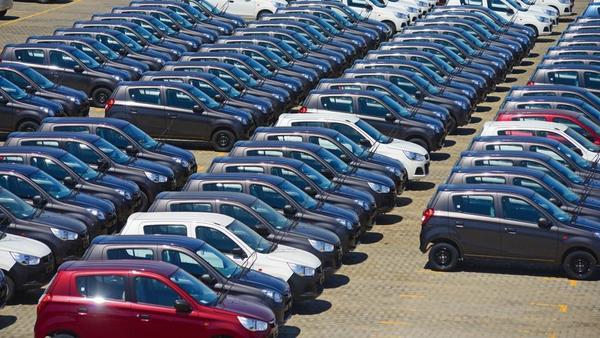
In this new system, the government has kept the GST on Battery Electric Vehicles (BEV)unchanged, giving them much relief and boost to the industry. However, it has also created a window for battle between Internal Combustion Engine (ICE) vehicles and EVs as the government has slashed the GST rate on components of vehicles to 18 per cent.
Udit Sheth, Vice Chairman, Setco Automotive said, “The reduction in GST from 28 per cent to 18 per cent on auto components is a welcome step that will provide much-needed relief to both the auto industry and consumers and have a great impact on Total Cost of Ownership.”
He further said, “For us at Setco, it will not only ease cost pressures but also stimulate demand, creating a positive ripple effect across the entire supply chain. We see this move as a catalyst for growth in the commercial vehicle sector, and we are optimistic about the momentum it can generate for the broader economy.”
Meanwhile, Omega Seiki found this opportunity competitive which will accelerate innovation, push both sectors to deliver greater value.
Expressing his excitement Uday Narang, Founder, Omega Seiki Pvt Ltd said, “The GST rationalisation is a landmark move that will reshape the mobility landscape. By retaining 5 per cent GST on EVs while reducing rates on ICE cars, the government has created a more level playing field that will intensify competition between conventional and electric mobility.”
He added that for EVs, the continued low GST signals long-term policy stability, encouraging investments and adoption.
“For ICE players, the cut brings relief and affordability. Ultimately, this will accelerate innovation, push both sectors to deliver greater value — and in the end, the real winner is the consumer,” he said.
Aditya Baheti, Co-Founder ZELO ELECTRIC observed that this move doesn’t just focus on immediate affordability but on building a sustainable ecosystem for electric mobility in the country.
“While the GST rate for EV two-wheelers remains stable at 5 per cent, this continuation further strengthens the sector by promoting adoption while providing much-needed regulatory support for manufacturers and investors. The government’s move in favor of EVs, even while reducing rates for ICE vehicles, signals their long-term commitment to electric mobility,” Baheti said.
“Though the immediate impact on EV pricing may be minimal, the standardization of auto components at 18 per cent GST will streamline our supply chain and manufacturing processes. The reduced gap between EV and ICE prices might influence some short-term purchase decisions, but we view this as the government balancing immediate economic concerns while maintaining support for sustainable transportation. In a holistic view of the automobile sector, we view the new taxation as favorable for the ultimate acceleration and adoption of EVs in India. The focus isn’t just on immediate affordability but on building a sustainable ecosystem for electric mobility in India,” he added.