Tehelka SIT takes an inside look at India’s political troll factory, where hired online operatives work to attack and discredit political rivals.
“West Bengal Chief Minister Mamata Banerjee can be trolled on social media for a week for Rs 25 to 50 lakh. The same is the rate for Bihar Chief Minister Nitish Kumar. If you want the trolling to continue for a month, the amount runs into crores,” said Kamal Nayan Mishra, alias Rohan Mishra, founder-director of XXXX Technology Private Limited, to a Tehelka undercover reporter.
“I have a fixed rate of Rs 10 lakh per candidate for the upcoming assembly elections in West Bengal and Bihar. For Rs 10 lakh, I will completely destroy the image of any candidate—regardless of party—through social media trolling!,” Rohan says while explaining his ‘services.’
“Mamata Banerjee, Nitish Kumar and Uddhav Thackeray are easy targets because they don’t have strong IT teams. On the other hand, it is difficult to troll Arvind Kejriwal, Maharashtra’s Chief Minister Devendra Fadnavis and MNS chief Raj Thackeray because their IT cells are very strong,” he said while offering a glimpse into his target-selection criteria.
“It is tough to go after BJP-led Central government cabinet ministers, their senior bureaucrats and BJP-ruled state chief ministers. They strike back hard, and their digital teams are so effective that it backfires on us,” Rohan added.
“It’s easy to troll someone on behalf of the BJP-led Central government because they are in power—and if anything happens to us, they will protect us,” he told Tehelka.
“MLAs and MPs across political parties are easy to target. Trolling them doesn’t usually backfire. The going rate is Rs 2.5 to 3 lakh per week if the trolling is done from Nepal. If it’s done from Malaysia, the rate increases to Rs 4 to 5 lakh per week. Rates in Nepal are lower because trollers there are easier to trace, unlike in Malaysia where the government doesn’t cooperate with India and the investigation is stonewalled. That’s why Malaysia is costlier,” Rohan said while explaining the intricacies of the trade.
“In Congress-ruled Karnataka, Chief Minister Siddaramaiah is easy to troll, but not Deputy Chief Minister D.K. Shivakumar—he’s a strong man, and he will hit back,” he claimed.
“Trolling is no longer done from within India. It now happens from countries like China, Pakistan, Malaysia and Nepal, where the risk of being caught is much lower. Since India has good relations with Nepal, the risk of trollers getting caught is higher there as compared to countries like Malaysia, China or Pakistan. That’s why Nepal remains cheaper than the others,” he said.
By definition, trolling on social media involves posting deliberately provocative, offensive or disruptive content online to upset people and provoke strong reactions. While India doesn’t have a specific law that directly addresses “trolling”, several actions associated with it—such as defamation, criminal intimidation, promoting enmity, and sexual harassment—are punishable under existing laws.
Recently, during Operation Sindoor, a precision military operation by India targetting terror hubs in Pakistan in response to Pahalgam terror attack, Indian Foreign Secretary Vikram Misri and his family were trolled after he announced a ceasefire between India and Pakistan. The trolling drew sharp condemnation from IAS and IPS associations and several political leaders who rallied behind Misri. Over the years, trollers have targeted a range of individuals from different sections of society—some have been arrested, but many remain untraceable.
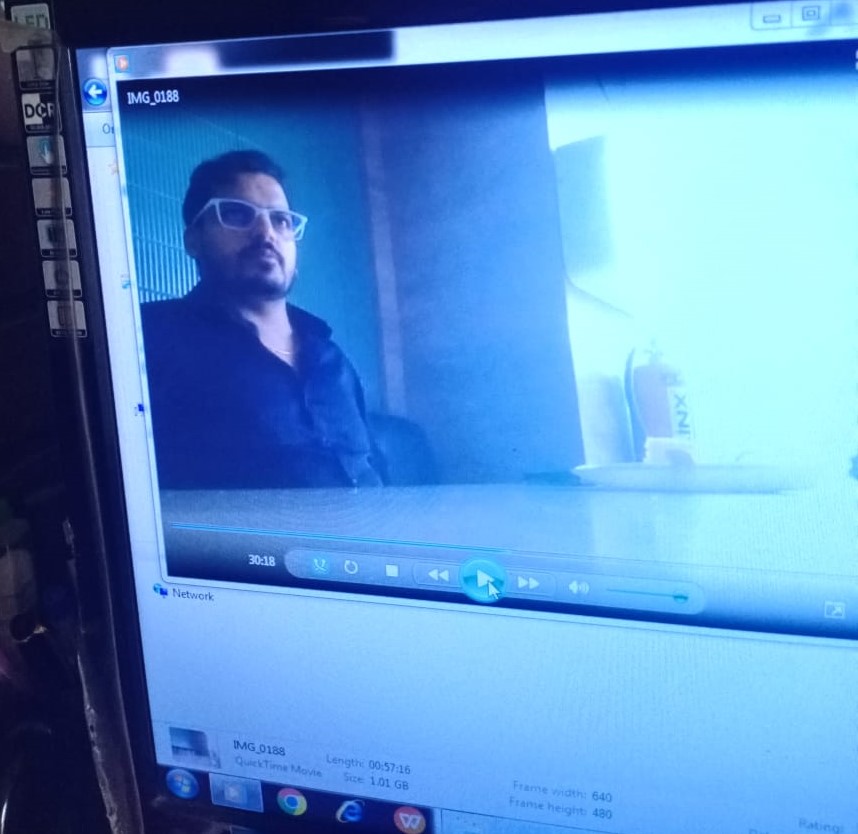
To understand the inner workings of this trolling industry, Tehelka conducted an undercover investigation—one that hasn’t been attempted before. We met Kamal Nayan Mishra alias Rohan Mishra, founder-director of XXXX Technology Private Limited, headquartered in Noida. The meeting took place at a restaurant in Noida. We posed as clients seeking to have someone trolled online.
In the opening moments of the sting below, the undercover reporter asks a straightforward question—has Rohan Mishra ever arranged trolling on social media? The answer is equally straightforward. Without hesitation, Rohan admits to doing it “many times”—for clients, for employees, and as part of PR. Though he refuses to name names, he confidently assures that the job gets done, and done well enough so that no one looks for a second vendor.
Reporter- Ye batao, trolling karwai hai kabhi social media par?
Rohan- Haan, ab tak kis kis ki karai hai bata nahi sakta aapko…kabhi client ke liye, kabhi employee ke liye…ho jata hai sab par akele nahi…link mein hi karna padta hai.
Reporter- Ye cheezein to openly hoti nahi hai….agar aapne karai hai to mein baat karwaoon.
Rohan- Karai hai; par kiski, ye nahi bataunga; lekin karai hai — ye part of PR hi hai.
Reporter- Mein price ki baat nahi kar raha…kaam ho jaayega?
Rohan- Kaam ho jayega.
Reporter- Karaya hai aapne pehle?
Rohan- Bahut baar karaya hai…ek baar aap karaogey na, aap baat hi nahi karna second wale se, jabtak mein pehla kaam karke na aa jayun.
[What we see here is how normalised online trolling has become in the business of image management. Rohan treats it like any other PR service. The larger concern is this: when distortion becomes routine, truth stands little chance.]
Before getting to our actual purpose, we asked Rohan whether he could troll politicians—like MLAs, MPs, Chief Ministers, and senior bureaucrats. In response, Rohan admitted that he could troll West Bengal Chief Minister Mamata Banerjee, Jammu and Kashmir’s Omar Abdullah, and Bihar’s Nitish Kumar, as all of them have relatively weak IT teams. According to him, MLAs and MPs from any party can be targeted easily. However, it is difficult to troll Cabinet Ministers of the BJP-led Central government, their Chief Ministers, and senior bureaucrats. Since they are in power and backed by strong IT teams, such attempts could backfire on him, he explained. Arvind Kejriwal, too, Rohan said, is hard to troll because he has a strong digital team as well.
Reporter- Trolling matlab gaaliyan bakna?
Rohan- Jo bhi hai…abuse karna, bully karna, sab hai social media par.
Reporter- Aap batao kahan se karwaoge?
Rohan- Nepal se.
Rohan (continues)- Profile kya hai?
Reporter- 2 politicians hain, 2 bureaucrats hain, 1 businessman hai.
Rohan- Kya.. grade kya hai inka?
Reporter- Bureaucrat to maan lo A grade.
Rohan- Politician mein MLA ka ho jayega.
Reporter- MLA ka kara dogey?
Rohan- Haan ..Mantri ka na ho, na Cabinet Minister ka.. kyunki unki poori team hoti hai…unke saath dikkat hai.. MLA ka dikkat nahi hai…wo backfire nahi kartey.
Reporter- Member of Parliament?
Rohan- Haan wo bhi chalega.. bas Minister na ho….wo costly bhi hai.
Reporter- Wo dene ko taiyyar hain… ek CM hai.
Rohan- CM ka to nahi ho payega….accha BJP ka na ho?
Reporter- BJP ka nahi hai…par CM hai… BJP ka na ho aisa kyun?
Rohan- Unka control hai…badi team hai BJP ki.
Reporter- Matlab aapko pakad lenge…magar Nepal se kar rahe hain phir kyun pakad payenge?
Rohan- Main kehta hun starting ka kyun risk lena…CM bhi bada hai.. pehle baki logon ka dekhtey hain.
Reporter- CM doosri party ka de deta hoon?
Rohan- Haan, theek hai.
Reporter- Aap to bol rahe they BJP chodhkar sabke CM ho jayega?
Rohan- Haan aap party ka naam batao?
Reporter- TMC.
Rohan- Phir to ho jayega…inka ho jayega.
Reporter- Mamata Banerjee?
Rohan- Haan inka ho jayega…koi dikkat nahi hai.
Reporter- Bengal ki CM…ho jayega?
Rohan- Kejriwal mein dikkat hai.
Reporter- Kyun?
Rohan- IT ka banda hai….uski IT team strong hai….Mamata ki IT team strong nahi hai….Jammu-Kashmir ki bhi…Mumbai wale ki hai strong.
Reporter- Jammu & Kashmir wale ki aur Mamata ki nahi hai?
Rohan- Nahi hai.
Reporter- Mumbai ka hai…Fadnavis?
Rohan- Haan… BJP ka hai na.
Reporter- Mamata ka ho jayega?
Rohan- Mamata ka ho sakta hai.. Bihar ka ho sakta hai…Nitish ka bhi.
Reporter- Nitish babu ki trolling ho jayegi?
Rohan- Aaram se.
Reporter- BJP ke saath hai wo to?
Rohan- Ho jayegi. Usmein BJP ka fayda hoga!
Reporter- Kyon? Trolling negative hi hogi positive to nahi hogi?
Rohan- Obviously.
[As the undercover conversation progresses, Rohan explains how social media trolling works—not just as online abuse, but as a planned operation. What’s noteworthy is how clinically it’s discussed.]
Rohan confessed that wherever the BJP is in power in India, he will generally not troll their ministers or their MLAs. Nor will he target Rahul Gandhi or Priyanka Gandhi. He said he could troll the current Chief Minister of Karnataka, Siddaramaiah, but not the Deputy Chief Minister, D.K. Shivakumar—because Shivakumar, according to him, is more influential. Rohan claimed he only goes after those where trolling doesn’t backfire. He added that Jharkhand Chief Minister Hemant Soren may not have a strong IT team, but regions like Jamtara are full of fraudsters who could easily trace the trolling back to him.
Reporter- Kis kis ki trolling ho sakti hai, aap bata do?
Rohan- Jahan jahan BJP active hai party mein…satta mein na ho bas sarkaar mein…baki unka Karnataka mein jo hain Congress ke hi hain CM.. uska ho jayega…
Reporter- D.K. Shivakumar?
Rohan- No….uska nahi ho payega.
Reporter- Kyun?
Rohan- Zyada hype hai.
Reporter- Siddaramaiah se zyada?
Rohan- Haan.
Reporter- Rahul-Priyanka?
Rohan- Hone ko to ho jayegi… backfire karega.
Reporter- Mujhe inka karana nahi hai, apni jankari ke liye pooch raha hoon.
Rohan- Backfire jitna jhel pao utna hona chahiye.
[As the conversation turns to specific names, Rohan lays out his informal criteria for who can be trolled. The rule, as he puts it, is simple: troll only those whose backlash you can absorb. This exchange shows how calculated and cautious the trolling business really is.]
Rohan assured us that nothing would happen to him for trolling even as he nonchalantly explains how online trolling operations are routed through foreign countries like China, Pakistan, Malaysia and Nepal in order to evade accountability. He claims Indian operators use routers to mask their identity, ensuring that the origin appears to be outside India.
Rohan- Backfire jitna jhel pao utna hona chaiye…hum kya kartey hain router lagatey hain, mera naam kahin nahi rahega…mera kuch nahi hoga, jo aayega Nepal se aayega, Malaysia se, China se aayega…sabse badiya China se…latest hoga.
Reporter- Sarey log China ke honge karne wale?
Rohan- China se.
Reporter- Wo pakad mein nahi aatey?
Rohan- Pakad mein aatey hain…kuch kar nahi saktey na unka.
Reporter- Pakistan se bhi hota hai?
Rohan- Haan..China ka wahi se to aata hai…China ka headquater Pakistan hi hai.
[This exchange reveals how some trolling networks exploit international servers to dodge Indian laws. Rohan explains even if these operatives are detected, little can be done since they fall outside Indian jurisdiction.]
Rohan told Tehelka that if the BJP asked him to troll someone, he would do it without any hesitation, because the party is in power and would protect him if he got into trouble while trolling.
Rohan- Dikkat kya aati hai koi support nahi karta…agar BJP karae to koi dikkat nahi.
Reporter- Accha BJP chahe kisi ka karwae?
Rohan- Koi dikkat nahi…
Reporter- Sarkar mein hai.. bacha legi?
[In this brief but telling exchange, Rohan admits that the real challenge in trolling arises only when there’s no institutional backing. This snippet lays bare the sense of impunity that political backing can provide.]
We then presented our own fake deal to Rohan, saying we wanted one woman, supposedly involved in a romantic dispute, along with one man, a psychiatrist based in Australia, to be trolled on social media. Rohan agreed to take up the task and demanded Rs 2 to 2.5 lakh for trolling the woman for a week from Nepal. He assured us that it would take Indian authorities at least a decade to track them down.
Reporter- Accha hame karani hai..ek hamare dost hain..Australia mein rehtey hain…ek to unki trolling.
Rohan- Profile kya hai?
Reporter- Kuch nahi woe psychiatrist hain…Brisbane mein rehtey hain detail mein de dunga.
Rohan- Kuch cheezein pata honi chahiye trolling mein?
Reporter- Saari cheezein to theek nahi hoti trolling mein…kuch farzi bhi hota hai.. aur ek client hain, unka affair chal raha hai kisi se.. shadi nahi ho pa rahi…. wo ladki kahin aur shadi kar rahi hai…ladki ki trolling karwani hai shaadi na ho paaye
Rohan- Ho jayega…bas photo mil jaaye uska…
Reporter- Wo sab hum provide karwa denge.
Rohan- Kya hota hai ID banti hai pehle…
Reporter- Ab ye ladki aur Australia wale ka aap kharcha bata do?
Rohan- Aap details de do pehle.
Reporter- Wo mein de dunga.. aap idea to de do?
Rohan- Ladki ke to Rs 2-2.50 lakh lagega
Reporter- Kitne din hogi trolling?
Rohan- 7 din.
Reporter- 7 din lagataar?
Rohan- Matlab hoti rahegi.. phir shant beth jayege… phir hogi…
Reporter- Kis platform par?
Rohan- Instagram par, kyonke Twitter par koi fayda nahi hai…agar public figure hai to Twitter par hota hai fayda…..Facebook aur Instagram sahi hai is case mein.
Reporter- X par nahi hota?
Rohan- X par hota hai agar public figure ho…
Reporter- Lekin kahin pakad mein na aaye hum log?
Rohan- Nahi, pahuchtey pahuchtey 10 saal lag jayenge!
[This disturbing exchange shows that even private citizens, with no political stature, can be targeted for online harassment—for a price. What we see here is how casually lives can be disrupted, just to serve someone’s malice.]
When we expressed concern that the woman might be driven to suicide after being trolled, Rohan advised us to operate from Malaysia instead of Nepal to deal with this possible scenario. According to him, trolling from Malaysia carries a lower risk of getting caught because the Malaysian government does not cooperate with Indian authorities. However, he hastened to add that this option would be more expensive, costing around Rs 4 to 4.5 lakh per week.
Reporter- Aisa na ho ladki suicide etc kar le trolling ke baad?
Rohan- Haan ye to hai…ladki kahan ki hai?
Reporter- Gurgaon ki.
Rohan- Ye Nepal se ho jayega….magar kahin wahi galti na ho jaaye.
Reporter- Suicide wali?
Rohan- Haan…kyunki usmein govt support nahi karti…Malaysian govt Indian govt ki support nahi karti..
Reporter- Malaysia se ho jayega?
Rohan- Haan.. magar 4-4.50 lakhs starting hai…
Reporter- Aur Australia wale ka?
Rohan- Wo suicide to nahi karega?
Reporter- Nahi.
Rohan- Wo Nepal se karega.. 2.50 lakhs starting hai..7 din ka package hai…7 din lagataar karega…ek haftey ka 2.50 lakh.
Reporter- Matlab 1 month karwatey hain to 2.5 lakh multiply by 4.. matlab 10 lakh ho gaya…aur Malaysia se karwatye hai to…?
Rohan- Rs 4 se 4.5 lakh se starting hai.
Reporter- Ek haftey ka…Australia wale ka to 20 lakh padega…
[As the conversation turns darker, the reporter raises a chilling concern—what if the woman being trolled ends up committing suicide? Rohan acknowledges the risk but doesn’t back down as he calmly suggests ways to deal with such a situation.]
The conversation now shifts to the operational side of the trolling business, where Rohan lays out payment terms and precautions. He insists on advance payment—initially 50%, rising to 100% for future deals. He also gave us some precautionary tips to avoid being caught by the authorities. He said we should never talk about trolling over the phone and should avoid carrying our phones to the meeting point, to avoid our location being traced. Third, we should avoid meeting at places with CCTV cameras. He advised us to borrow cash from someone instead of withdrawing it from the bank to make the payment, warning that any financial trail could come under police scrutiny if something untoward were to happen to him.
Rohan- Jaise chaltey samay aapko advance payment karna hoga…pehla deal mein 70-30 kartey hain…baaki uske baad to advance letey hain poora…pehle paisa liya uske 7 din baad shuru kartey hain kaam, kuch connection liya…uske baad bahut alert rehna padta hai, agar milne bhi aa rahe hain to phone se koi communication nahi rakhtey.
Reporter- Pakde gaye to poochtey honge kahan mile, kaise mile?
Rohan- Haan. Isliye phone par baat nahi kartey, location le liya jahan camera na laga ho…
Reporter- 70 percent advance?
Rohan- Pehli baar 50 percent kar dena.
Reporter- Malaysia Nepal dono ka 50 percent advance?
Rohan- Sab ka, ye to pehli baar hai isliye mein kar raha hoon. Iske baad jab bhi kaam hoga, 100 percent payment hoga…aapka kaam aapko lekar aana hai hamara kaam hamko karna hai…sara payment hoga cash…
[This part shows just how organised and transactional the business of trolling has become. For Rohan, trolling isn’t personal—it’s a professional “service,” priced and protected like any other trade.]
The discussion turns to election season trolling, where Rohan confidently offers his services to target candidates in Bihar elections from any party—BJP, RJD or JDU—with a fixed package of Rs 10 lakh per candidate. He promises to “destroy” reputations with relentless negative trolling over a month, designed to haunt the candidate right up to the polls. Rohan added that in state assembly elections, he is not afraid of the BJP because state ministers don’t come after you as aggressively as cabinet ministers at the Centre. His approach, he says, is the same across states like Bihar, Bengal, and Jharkhand.
Reporter –Agar Bihar ki koi trolling aati hai hamare pass?
Rohan- Ho jayegi.
Reporter- RJD ki, BJP ki, ya JDU ki?
Rohan- Ho jayegi. Ek candidate ka 10 lakh lenge…..barbaad kar denge 10 lakh mein..trolling se sab!
Reporter- Hai aapka package?
Rohan- Sirf negative..barbaad kar denge!
Reporter- Kitne din?
Rohan- Mahina bhar chalega…break de de kar chalega, matlab chunav tak usko pareshan kartey rahenge…chahe kisi ka ho.. BJP ka ya RJD ka?
Reporter-Chahe kisi ka bhi ho..yahan kyun nahi darr rahe tum?
Rohan- Cabinet Minister ka apna izzat hai…yahan Bihar mein kuch nahi…Cabinet minister hamare peechey pad jayenge…ye nahi.
Reporter- State ke Minister nahi padenge….apko Centre se zyada dikkat hai?
Rohan- Sabko hai, sirf hame nahi.
Reporter- To ye 10 lakh aapka ek candidate ka hai?
Rohan- Haan….hum chunav se 3 mahina pehle start kar denge…pehle hum try karenge ticket usey mil jaaye, ticket milta hai ek mahina pehle, confirmation jab aata hai na.
Reporter- Bengal mein next year chunav hain.. wahan kya ho sakta hai?
Rohan- Same hai. Bihar ho gaya, Bengal ho gaya, Jharkhand ho gaya…in sabka same hai.
[This exchange reveals trolling as a premeditated election weapon, priced and timed to disrupt political campaign.]
Now, Rohan told us about the rates for social media trolling in South India. He reveals that social media trolling rates in South India are almost double compared to North India. The reason, he explains, is that people in the South are generally more educated and capable of pushing back, making trolling a riskier business. He confirms that while states like Bihar, Bengal, Uttar Pradesh, Rajasthan, and Jharkhand have a standard rate of Rs 10 lakh per candidate, the price doubles for states like Kerala and Karnataka.
Rohan- South ka zyada hai…double hai.
Reporter- South mein double kyun hai?
Rohan- Wahan par log zyada padde likhe hain…backfire kar saktey hain.
Reporter- Matlab South mein bewakoof banana asaan nahi hai? Kaun kaun se state bataye aapne.. Bihar, Bengal, Uttar Pradesh, Rajasthan, Jharkhand… yahan 10 lakh per candidate?
Rohan- Haan…Kerala, Karnataka bhi ho gaya.. yahan bhi double lagega.
[This exchange reveals how regional social dynamics and education levels influence trolling costs. It underscores that online harassment is a calculated risk, priced according to the likelihood of targets retaliating or exposing the perpetrators.]
Rohan further explains the two-fold strategy behind election trolling. First, there is trolling targeted at those vying for party tickets, aimed at boosting the client candidate’s own chances. Second, once the tickets are decided, trolling shifts to pulling down client candidate’s opponent in the poll arena. The goal is clear: damage the rival’s image to secure a political edge.
Reporter- Maan lo mein chunav ladh raha hoon mera opposite jo hai uski trolling karni hai.
Rohan- 2 tarah se trolling hoti hai…ek to wo jo ticket maang raha hai aur ek wo jo aage chal raha hai…ticket mein to jo aage hai usko peeche karna hai trolling se…aapka naam parallel dikh raha hai to jo aage hai usko down karna hai.
Reporter- Ye aap election ticket ki baat kar rahe hain?
Rohan- Ticket ke liye aap ja rahe ho ussey pehle.
Reporter- Ek to trolling ye ho gayi, ab doosri?
Rohan- Wo jo saamne wala hai usko down karke…negative trolling se.
[This reveals how trolling is used strategically, not just as random abuse but as a calculated tool to influence political outcomes. It underscores the weaponisation of social media in elections, where reputations are targeted with ethics taking a back seat.]
In the next exchange, Rohan tells us the rates for trolling Mamata Banerjee and Nitish Kumar on social media. He demanded Rs 25-50 lakh per week for trolling either of them, and said if it continues for a month, the amount would run into crores. For MLAs and MPs, the rates drop to between Rs 5 and 8 lakh, depending on the individual’s profile.
Reporter- Mamata ka kispar karwaogey?
Rohan- Twitter par hoga na, paise zyada lagengey, ismein darr hota hai na account suspend honey ka.
Reporter- Aur Nitish ka?
Rohan- Wahi same hai…25-50 haftey ke lag hi jayenge.
Reporter- Matlab ek Mahina karwaogey to crore se oopar ho jayega. Bas hamarey liye koi dikkat na ho, dekh lena.
Reporter (continues)- MLA, MP ka kitna hoga?
Rohan- 5-7-8 lakh…depend karta hai na kaun hai.
[While Rohan discusses the platforms and costs involved in trolling high-profile politicians like Mamata Banerjee and Nitish Kumar, it comes to fore how social media platforms and their policies shape the economics of trolling. Rohan reasons that Twitter trolling is expensive because it entails the risk of account suspension while quoting the weekly price at Rs 25-50 lakh.]
Rohan admitted to Tehelka that during the 2024 general elections, he was caught hacking the social media account of a candidate contesting the Lok Sabha elections. As a result, his original SIM card was blocked, and he is now using a new one. In another admission, Rohan said his partner was once caught trolling someone on social media, after which they destroyed their laptop to avoid detection. He insisted that we use the term “negative PR” instead of trolling while conversing with him.
During the conversation, Rohan claimed that the social media trolling of Foreign Secretary Vikram Misri’s family during Operation Sindoor was carried out from Malaysia. He repeatedly stressed that the BJP-led central government and its bureaucrats are hard to troll because of their power, and attempts can backfire on him. He cited Maharashtra Chief Minister Devendra Fadnavis and MNS’s Raj Thackeray as tough targets due to their strong IT teams, while Uddhav Thackeray is easier to troll because of his weak IT setup.
Rohan Mishra and his father are the two directors of his company. Officially, his name is Kamal Nayan Mishra, as shown on his Aadhaar and PAN cards, but he deals with clients under the name Rohan Mishra. He met the Tehelka reporter using this alias. When questioned about the dual identity, he explained that handling such “negative” work requires evading authorities, so he uses a different name with clients as a precaution.
Asked to show evidence of his previous trolling work, Rohan said they do not keep records; the work is created and subsequently destroyed to avoid controversy. He also refused to reveal client names, citing it as a business strategy. Rohan invited us to assign him low-profile social media trolling to test his skills. At the time of writing, he called to say he is currently engaged in another social media trolling project.
So, the Tehelka investigation exposes the hidden, systematic nature of paid political trolling in India—an industry that thrives in the shadows, carefully balancing risks and rewards while shaping public opinion in concerning ways.
Tehelka SIT Report Impact
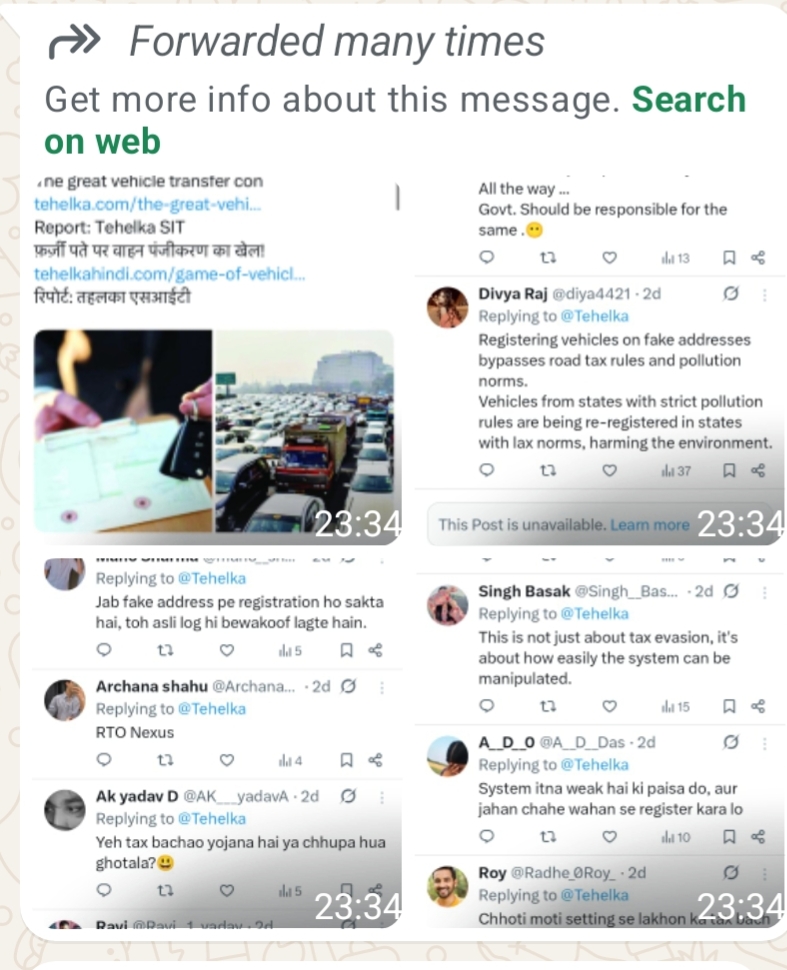
Tehelka Special Investigation Team’s (SIT) story “The Great Vehicle Transfer Con” has been warmly appreciated by our readers and social media users. The investigation exposed a thriving black market in Delhi-NCR, where used-car dealers and brokers exploit loopholes in the system to register vehicles on fake addresses—using forged rent agreements and Aadhaar details—for a price.
The report has been widely viewed on X (formerly Twitter), with the platform registering 16K views and around 500 ‘likes.’ Viewers on X and Facebook responded warmly, with many, like Kavita Sharma, hailing it as an “Excellent investigation.”
Meanwhile, the exposé on the fake vehicle registration racket and its deep security implications has also left many readers exasperated. Some alleged a deep nexus between used-car dealers and authorities such as the RTO, while others expressed frustration at how law-abiding citizens feel cheated after learning the facts. Mano Sharma summed it up bluntly: “Jab fake address per registration ho sakta hai, toh asli log bewakoof hi lagte hain.”