
Punjab has entered election mode well ahead of the 2027 Assembly polls, with the major political players beginning to position themselves for what is likely to be a closely fought and increasingly fragmented contest.
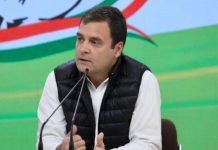
The entry of national leaders will further raise the political temperature. Rahul Gandhi is expected to visit Punjab later this month as Congress steps up its campaign, while Union Home Minister Amit Shah is also expected to address the BJP’s anti-drug campaign in the state.
The political landscape is already showing signs of a multi-cornered battle, with the Aam Aadmi Party seeking a second consecutive mandate, Congress attempting to rebuild its organisation, the BJP looking to expand its footprint, the Shiromani Akali Dal keeping the possibility of a return to its old alliance with the BJP open, and Waris Punjab De emerging as a new factor in the state’s electoral politics.
The possibility of a BJP-SAD reunion remains one of the most closely watched developments. The two parties may have parted ways over the farm laws, but their political relationship has never entirely disappeared from Punjab’s electoral calculations. With the 2027 election approaching, signals from both sides suggest that the door for an understanding has not been shut. Any such arrangement would have implications beyond seat-sharing.
The BJP and SAD have traditionally drawn strength from different sections of Punjab’s electorate, and a renewed alliance would seek to bring those constituencies together once again. At the same time, both parties have undergone considerable political changes since their separation, making the terms of any possible reunion more complicated than simply returning to the old formula.
While the BJP and Akalis weigh their options, the AAP has chosen to move decisively into campaign mode. Chief Minister Bhagwant Mann launched the party’s 2027 election campaign from Ludhiana, releasing a poll poster built around the claim that his government has fulfilled all its major promises. The choice of Ludhiana is significant, but more important is the political message behind the launch. AAP is effectively asking voters to judge it on its performance over the past four-and-a-half years rather than merely on the promises that brought it to power in 2022.
The coming months will therefore see an increasingly aggressive battle over the government’s record. AAP will highlight what it describes as the delivery of its promises, while the opposition will attempt to focus attention on the gaps between expectations and outcomes. The party’s campaign will ultimately have to answer the central question confronting every incumbent government: whether the electorate believes enough has changed during its tenure to justify another mandate.
Congress, meanwhile, has recognised that its biggest challenge may be organisational rather than ideological. The appointment of Sachin Pilot in place of Bhupesh Baghel as the party’s Punjab in-charge is an attempt to bring a fresh approach to a state unit that has been marked by factional differences. Pilot’s immediate task is to reduce the friction between competing leaders and ensure that the party enters the election as a reasonably cohesive organisation. Congress has already begun preparing for the polls, but its ability to convert its anti-incumbency narrative into electoral momentum will depend heavily on whether it can prevent internal rivalries from overshadowing its campaign.
The party’s decision not to project a chief ministerial face at this stage also keeps the leadership question open. For now, Congress appears more focused on collective campaigning and organisational consolidation. Whether that strategy helps the party present itself as a credible alternative will become clearer as the campaign develops.
A new and potentially disruptive element in the electoral equation is Waris Punjab De. The organisation has announced Amritpal Singh as its chief ministerial face for the 2027 election. His continued detention notwithstanding, the announcement gives the organisation a clear political identity and places it directly in the electoral arena. Waris Punjab De’s emergence is important because it could compete for a section of the electorate that has traditionally been associated with Panthic politics and the broader Akali space.
Its eventual electoral impact, however, will depend on whether it can translate its political visibility into a statewide organisational network and votes across constituencies. For the established parties, the development nevertheless creates another layer of uncertainty. The traditional contest between AAP, Congress, BJP and SAD may no longer fully capture the political choices confronting Punjab’s voters.
Among the issues likely to dominate the election, drugs remain particularly potent. The drug problem has once again moved to the centre of political discourse, with the BJP making it a major plank of its campaign and launching a state wide anti-drug campaign. The issue has obvious resonance in a state where addiction and the future of young people have remained politically sensitive subjects. For the opposition, drugs provide an opportunity to question the government’s record; for AAP, they provide an opportunity to argue that the problem is rooted in the failures of successive governments and that its own crackdown represents a different approach.
The larger question is whether the drug issue can become a decisive electoral narrative or whether it will remain one among several concerns shaping voter behaviour. Employment, agriculture, law and order, the economy and delivery of government schemes are also likely to play an important role.
Underlying all these issues is the question of anti-incumbency. AAP came to power in Punjab in 2022 with an overwhelming mandate and a promise of a different style of governance. By 2027, voters will have had a full term to assess whether that promise translated into tangible change. The party’s decision to make the government’s achievements the centrepiece of its opening campaign suggests that it intends to fight the election primarily on its record.
Rahul Gandhi is expected to visit Punjab later this month as Congress steps up its campaign, while Union Home Minister Amit Shah is also expected to address the BJP’s anti-drug campaign in the state. Their visits will underline the importance that both national parties attach to Punjab ahead of the Assembly election.
The political contest, therefore, is beginning much earlier than the formal election schedule. AAP has already sounded the campaign bugle; Congress is trying to settle its internal differences; the BJP is strengthening its organisation while keeping the possibility of an Akali alliance alive; the SAD faces a crucial strategic choice; and Waris Punjab De is attempting to establish itself as a new political force.
What makes the 2027 election particularly unpredictable is that none of these equations is yet final. The BJP-SAD relationship, Congress’s ability to overcome factionalism, Waris Punjab De’s electoral reach and the extent of anti-incumbency against AAP will all evolve over the coming months. Punjab’s voters are likely to be presented with more political choices than they were in 2022, and the eventual shape of the contest could depend as much on alliances and vote-splitting as on the individual popularity of the parties.