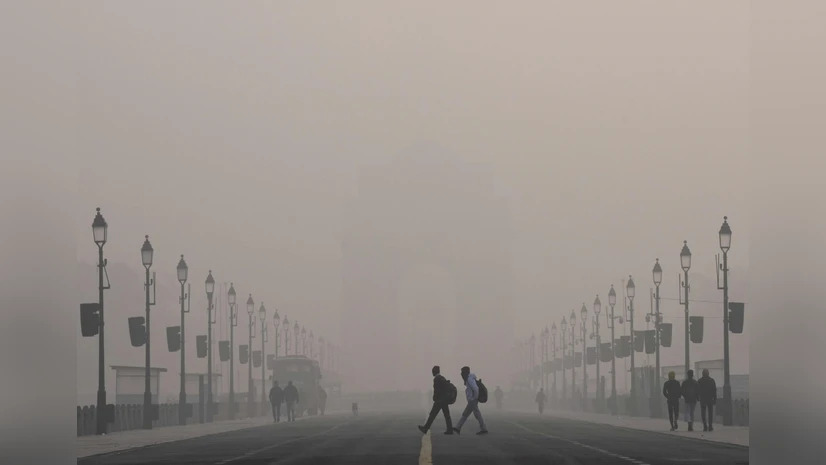
While cities like Delhi often dominate headlines due to their record pollution levels, the crisis extends far beyond the capital.
Our cover story, “Air under Siege,” explores how the air crisis has evolved from Delhi’s choking smog to the dust-filled skies of smaller towns, reshaping both everyday life and the nation’s approach to environmental governance.
Air pollution levels routinely breach hazardous thresholds, often reaching “severe” levels, particularly during the winter months. The combination of vehicle emissions, industrial discharge, construction dust, and the seasonal burning of crop residue in nearby states creates a deadly cocktail of pollutants, with particulate matter (PM2.5) levels soaring well above international safety standards. However, while the headlines frequently focus on Delhi’s smog, the problem is far from confined to the capital. Smaller cities like Lucknow, Kanpur, Patna, Panchkula, and Varanasi are also battling toxic air.
The impact of this pollution on public health is severe and undeniable. Studies show that exposure to high levels of air pollution is linked to a wide array of respiratory and cardiovascular diseases, including asthma, bronchitis, heart attacks, and strokes. According to the World Health Organization (WHO), India has some of the most polluted cities in the world, with the death toll from air pollution reaching staggering numbers each year. Vulnerable groups—such as children, the elderly, and those with pre-existing health conditions—are especially at risk.
What makes the crisis even more pressing is its broad societal impact. In the cities most affected by pollution, daily life has become a constant struggle for residents. People wear masks, limit their time outdoors, and rely heavily on air purifiers. The education system is disrupted, as schools close on days when pollution levels cross hazardous thresholds. In some regions, pollution has become so bad that it affects local economies, with industries forced to curtail production.
While the central government has implemented a variety of measures—including the introduction of cleaner fuels, the promotion of electric vehicles, and stricter emission standards for industries—the enforcement of these policies remains weak. Additionally, state governments often struggle to balance economic growth with environmental concerns, leading to inconsistent implementation across regions.
The introduction of stronger enforcement mechanisms, such as a national air quality index and regional pollution control boards, could hold industries and individuals accountable. Increased investment in clean technologies, green infrastructure, and public transport systems is essential to reduce emissions across the country.
In our investigative story, “SIR, Detention Centres and Elections” by the Special Investigation Team (SIT), we unravel how police verification drives in Gurugram, intended to identify illegal Bangladeshi migrants, subjected Bangla-speaking workers to detention and harassment—yet failed to shake their political loyalty.
As we welcome the New Year, we would like to extend our sincere greetings to Tehelka readers for 2026!