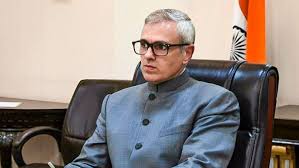
Jammu and Kashmir Chief Minister Omar Abdullah completed one year in office in October, but without the restoration of statehood as was expected to take place during this period.
Abdullah, who was sworn in on October 16 last year after leading the National Conference (NC) to a landslide victory in the 2024 Assembly elections, had campaigned on the promise of working to restore Jammu and Kashmir’s pre-August 2019 status. The party’s manifesto, titled “Dignity, Identity and Development,” pledged to work toward reinstating Articles 370 and 35A, and implementing the Autonomy Resolution passed by the State Assembly in 2000.
However, as the government completes its first year, little progress has been made on the reinstatement of statehood, let alone the ambitious and now out-of-bounds pursuits such as restoration of constitutional safeguards. The only significant steps include two resolutions – one passed in the Cabinet and another in the Legislative Assembly – urging the Centre to restore Jammu and Kashmir’s constitutional status and statehood.
Beyond these symbolic moves, the NC government has little to show on its core political agenda. Opposition parties accuse the Chief Minister of “appeasing New Delhi” and lacking the political will to confront the central government. Even voices within the party admit that intent has been missing.
“Whatever needs to be done on the political front has not happened. There was a need to show intent, but I personally feel that has not been shown till now,” NC’s Srinagar MP Ruhullah Mehdi said recently.
Valley-based parties, including the People’s Conference (PC) and the People’s Democratic Party (PDP), have accused Omar Abdullah of leading a “non-performing” government and doing the bidding of the centre.
Opposition leaders argue that the Chief Minister’s “soft” approach towards the BJP-led central government has weakened his political position. Abdullah, they claim, has failed to assert the authority expected of an elected leader, with key administrative powers still resting with the Lieutenant Governor’s office.
The NC, on its part, says it has taken several steps to improve the lives of ordinary people despite operating under a hybrid governance model.
Among the measures cited by the government are the increase in marriage assistance for poor brides from Rs 50,000 to Rs 75,000, free inter-district bus service for women, the restoration of the academic session to October-November, relaxation of stamp duties for property transfers among blood relatives, and free ration for economically weaker sections.
Omar Abdullah’s first year in power has been marked by multiple crises. The April 22 terror attack in Pahalgam dealt a heavy blow to Kashmir’s tourism sector, followed by cross-border shelling during Operation Sindoor in May, which caused civilian casualties and destruction in border areas.
Just as the administration began a campaign to revive tourism, the Valley was hit by devastating floods in September, damaging paddy fields and infrastructure. The government also came under fire for not resolving the ongoing dispute over the new reservation policy, which has reduced the general category quota in jobs and admissions to 30 per cent.
A Cabinet subcommittee was formed in December 2024 after widespread student protests, but its report, submitted four months ago, is yet to be acted upon.
It is true that Abdullah’s government has so far struggled to meet the expectations it raised during the campaign. The reason for this is the union territory status of J&K, giving the Lieutenant Governor the real power to take all the important decisions about governance of the region.
With four years still left in his term, Abdullah faces mounting pressure to demonstrate tangible progress on both political and governance fronts. For now, the restoration of statehood on which hinges his ability to fulfil his electoral promises, remains an unfulfilled aspiration.