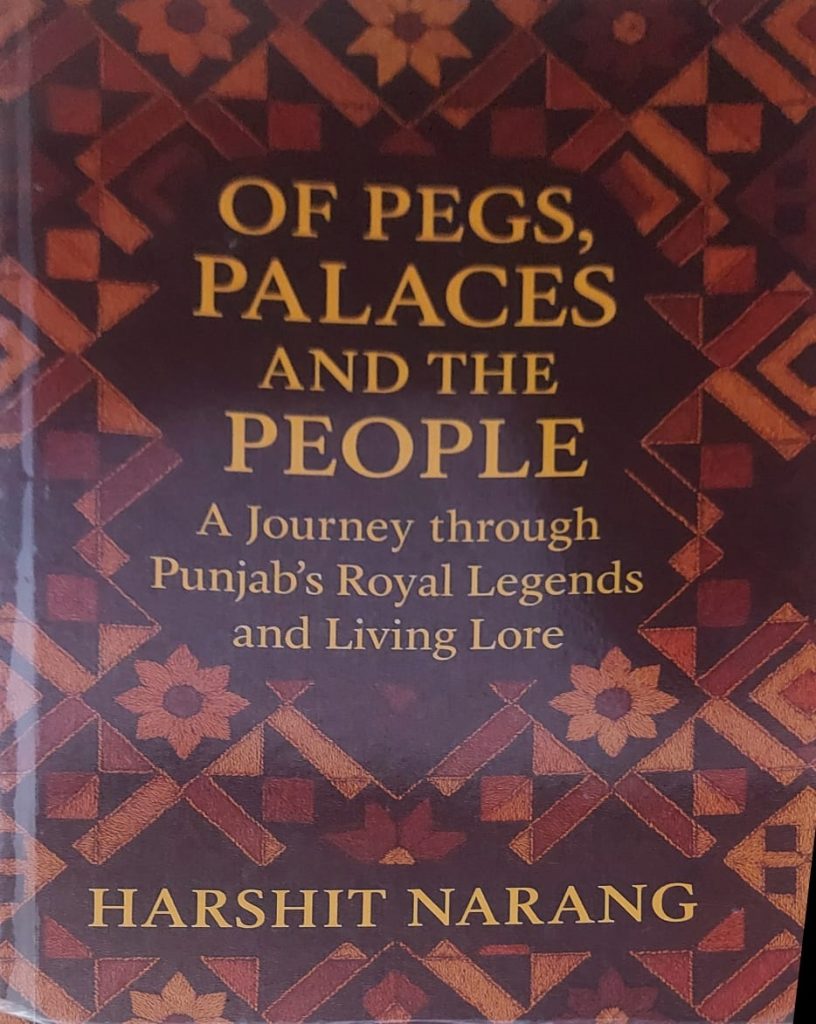
Title of the Book: Of Pegs, Palaces, and the People
Author : Harshit Narang
Publisher : Saptrishi Publications
Price: Rs. 399
Pages : 256 Pages
Of Pegs, Palaces, and the People is a captivating collection of short stories that draws readers into the heart of Punjab’s rich and often forgotten history. Each tale, rooted in real events, resurrects the lives of legendary emperors, warriors, queens, rebels, and common folk who have left an indelible mark on the region’s past. Harshit Narang, a debut author and seasoned bureaucrat, brings these forgotten figures to life in a way that is both scholarly and evocative.
Released recently in New Delhi, Of Pegs, Palaces, and the People marks Narang’s entrance into the realm of Indian non-fiction. This debut work is not just a historical account but a heartfelt tribute to a version of Punjab that many may be losing touch with—a Punjab filled with stories of royalty, rebellion, tradition, and pride.
Narang’s storytelling prowess shines throughout the book. With a researcher’s meticulous attention to detail and the heart of a storyteller, he revives long-buried chapters of Punjab’s past, many of which are seldom found in textbooks. From the fiery legend of Dulha Bhatti, often hailed as Punjab’s Robin Hood, to the intriguing life of Maharani Prem Kaur, the Spanish queen of Kapurthala, the book paints a vivid picture of a land once bustling with royal power and revolutionary fervor. The quirky legacy of the “Patiala Peg” is also explored, grounding the book in both the grand and the everyday elements of Punjab’s history.
The structure of the book—each chapter standing alone—offers a rich thematic diversity.
The writing itself is crisp, vivid, and deeply rooted in the culture of Punjab. The prose does not lean on dry, academic language; instead, it pulses with life, drawing readers into a world of emotion and texture. History here is not static; it’s a dynamic force, whispering through the pages, sometimes with the intensity of a forgotten secret. However, the book is not without its minor flaws. Some transitions between chapters can feel abrupt, leaving readers to navigate sudden shifts in time and context. In conclusion, Of Pegs, Palaces, and the People is a rich, engaging, and essential read for anyone interested in uncovering the hidden gems of Punjab’s royal and folk history. Harshit Narang’s debut work serves as both a personal tribute to his roots and a broader call to preserve the stories that have shaped a vibrant and fascinating region.