It is a story of India’s missing climate plan, greed, poor planning and corruption; As it is, the fragile Himalayas are sensitive to disturbances, and human activities are only adding to the stress making it exceptionally vulnerable to ecological damage and natural disasters.
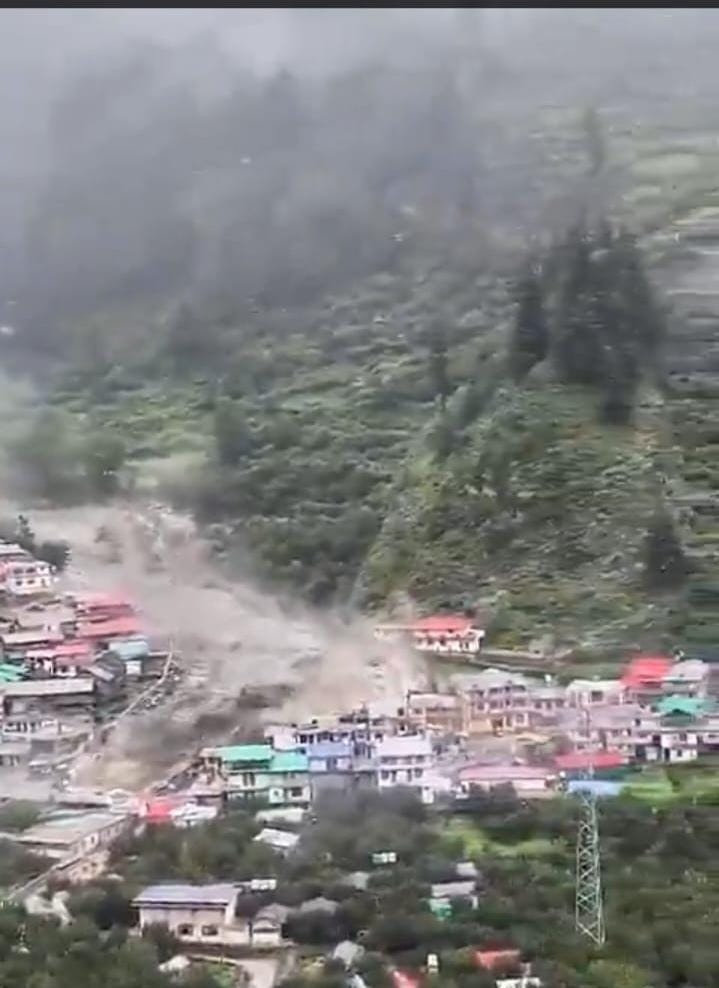
Landslides continue to block arterial roads leading up to Dharali where several people are said to be trapped after homes and cars were swept away by the raging waters on Tuesday following a devastating cloudburst wreaking havoc across hillsides, resulting in significant loss of life and property. As many as 11 Army personnel are reported to be missing from the nearby camp in Harsil and according to some, many tourists and locals also.
Experts say cloudbursts have increased in recent years in the Himalayas due to climate change, and also unplanned development in mountains. Rising temperatures have accelerated glacier retreat in India’s hill states Himachal Pradesh and Uttarakhand where major glaciers like Gangotri and Yamunotri are located and where local economies rely on tourism and forestry.
More than 6,000 people died and 4,500 villages were affected when a similar cloudburst devastated Uttarakhand in 2013.
Himachal Pradesh reported multiple flash floods, cloud bursts and landslides, leaving many dead and devastated in June-end and beginning of July.
Fact is seasons can no longer be boxed in neat month-wise time zones, heavy rains/cloud bursts can happen anywhere, anytime. Every year the frequency of these “natural calamities” is increasing and are only expected to increase more rapidly in future.
‘Young’ Himalayas
Himalayas—one of the most ecologically fragile regions in the world—are also the youngest major mountain range on Earth in geological terms.
Formed around 50 million years ago due to the collision of the Indian and Eurasian tectonic plates, the collision continues to push the Himalayas upwards. The rich biodiversity of the region, including rare flora and fauna, is under threat due to the shifting weather
Why are Himalayas so fragile
Basically, it is the story of India’s missing climate plan, greed, poor planning and corruption.
Himalayas are considered ecologically fragile because of the ongoing geological activity and their “young age” which contributes to their vulnerability to natural disasters and environmental changes.
Basically, Himalayas are young fold mountains that are still rising, making them prone to earthquakes, landslides, and avalanches. Located in a seismically active zone, the risk of earthquake-related hazards is always there.
What is further adding to the fragility is climate change causing glacial melting, altered rainfall patterns, and increased frequency of extreme weather events. Adding to it is the nonchalant way humans have been treating the precious natural resources. Deforestation, unplanned construction, unsustainable tourism practices are destabilising slopes, leading to soil erosion and landslides.
As it is, the fragile Himalayas are sensitive to disturbances, and human activities and lack of total planning are only adding to the stress making it exceptionally vulnerable to ecological damage and natural disasters.